
Advanced Guide for Roles and Policies
Users and Teams
OpenMetadata introduces a versatile hierarchical team structure that aligns with your organization’s setup. Administrators can mirror their organizational hierarchy by creating various team types. Organization serves as the foundation of the team hierarchy representing the entire company. Under Organization, you can add Business Units, Divisions, Departments, Groups, and Users. For instance, if your company is Facebook, then the Organization represents entire Facebook itself, which further houses diverse teams like Engineering, Sales, Finance, and Marketing.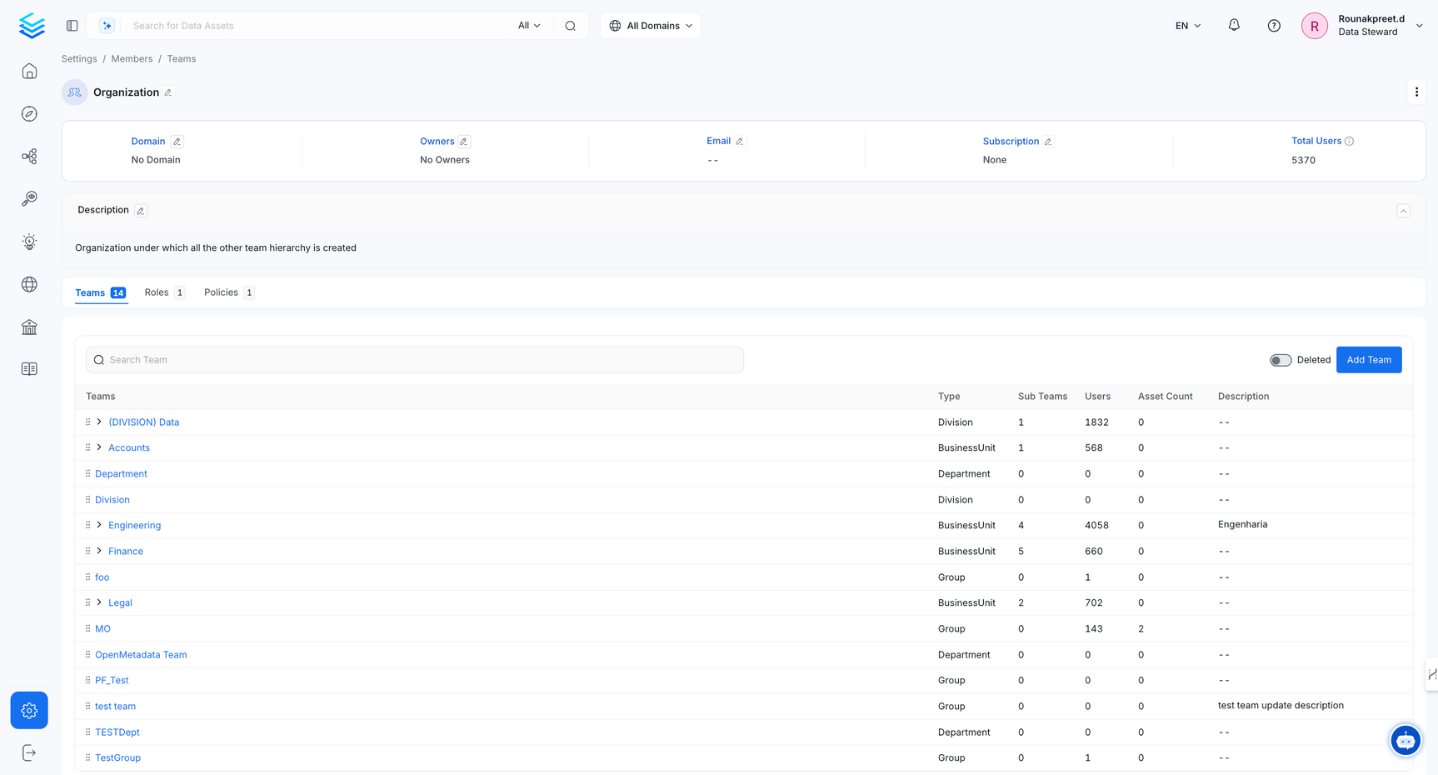
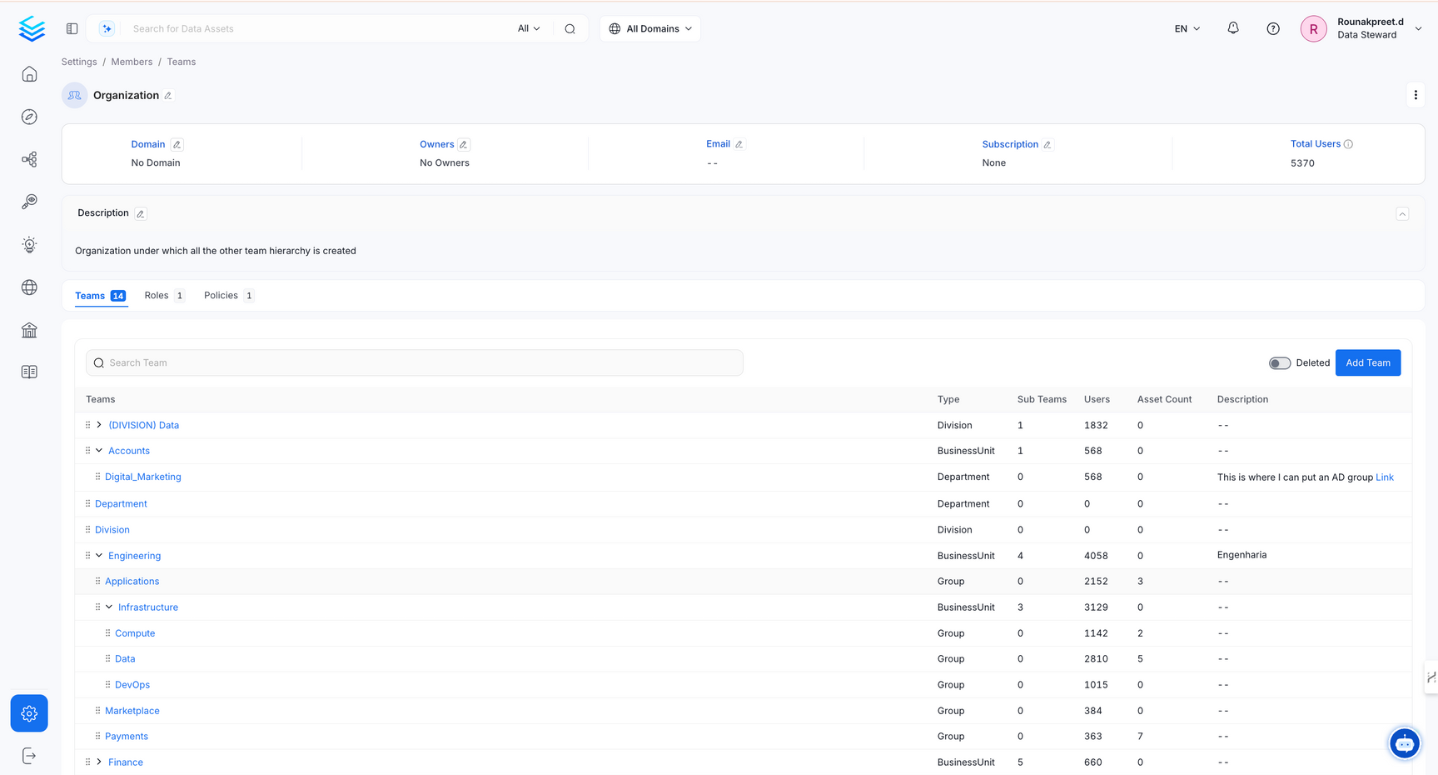
Note: Only Groups have the privilege of owning data assets within the OpenMetadata platform.
Access Control Design: Roles and Policies
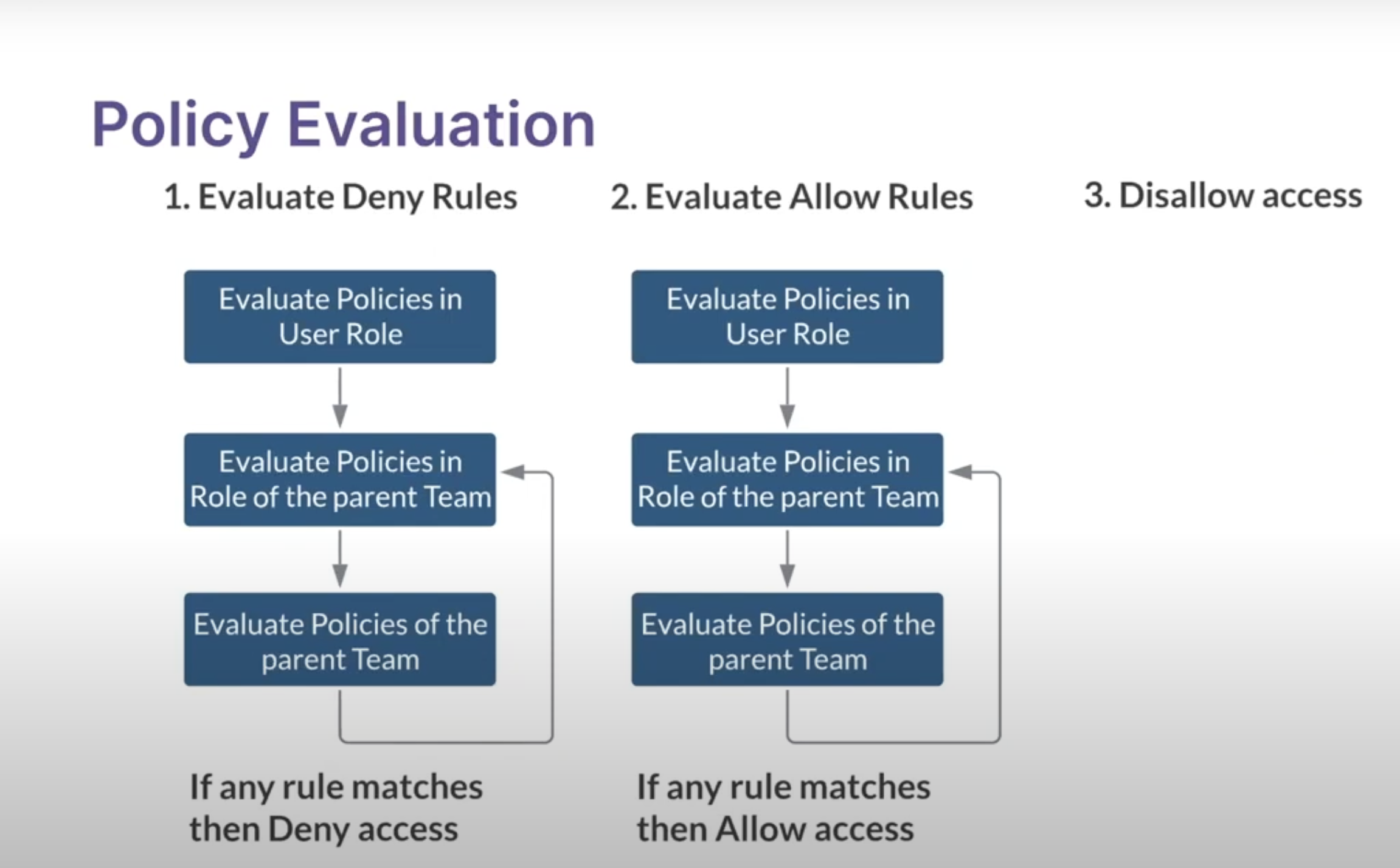
Authentication Flow
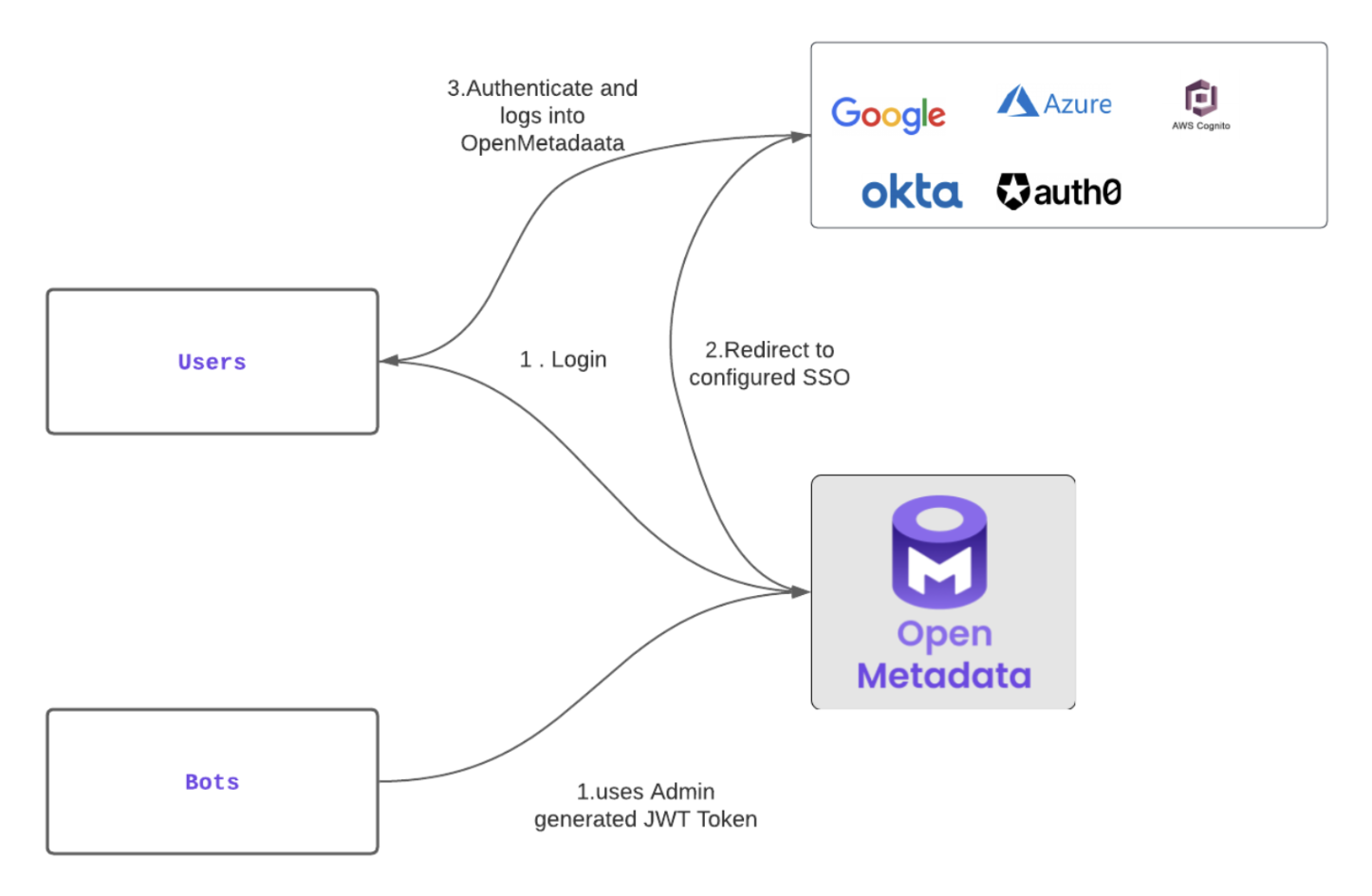
Authorization Framework
OpenMetadata’s authorization is a result of evaluating three crucial factors:
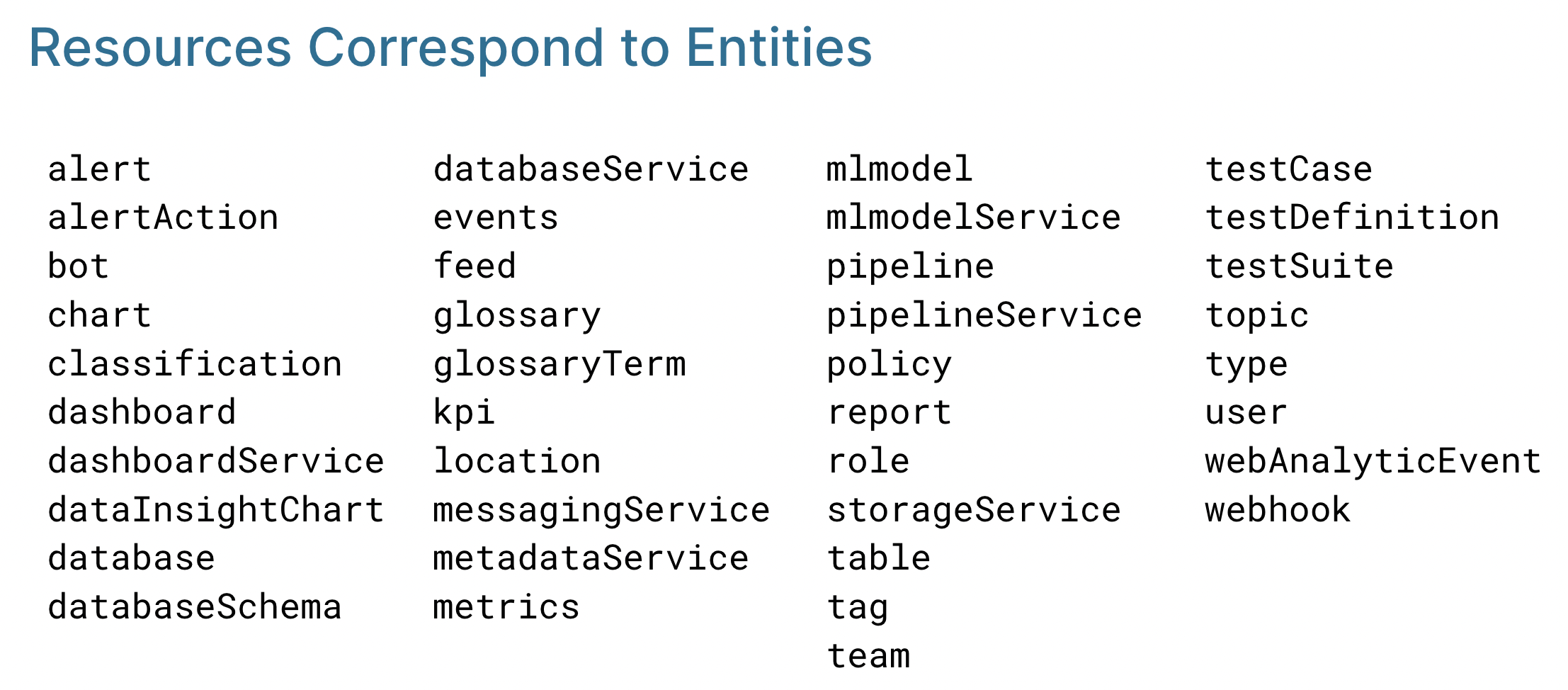
Note: When RBAC Search is on, the Queries tab on a table is filtered by the
Query resource, not the Table resource. The default Organization Policy has an unconditional ViewAll rule. If you removed or restricted that rule, non-admin roles need an Allow rule on the Query resource with ViewAll, in addition to their Table rules. Otherwise the tab stays empty. Don’t add an isOwner() condition to this rule: in search, it matches the owners of the query, not the owners of the table.Resource Scope Reference
The table below maps every resource category to the real-world access it controls. Use this when designing policies – start by identifying which categories are relevant to the role, then add only the operations needed.Note: Tables are the most critical data asset resource. Over-permissioning here has the widest blast radius, as many downstream queries, dashboards, and pipelines depend on them.
Key Scope Principles
- Service resources (Database Service, Pipeline Service, and so on) control the connection itself – granting Edit on a service gives access to all assets in that service.
- User & Access Control resources are the most sensitive category. EditPolicy and EditRole changes affect the entire permission model.
- AI/Agent resources govern automated execution paths. Restrict Agent Execution and Dynamic Agent to roles that actively need to run workflows.
- Data Governance resources (Tags, Glossary Terms, Domain) may seem low-risk but misuse can cause incorrect PII labelling with compliance consequences.
Difference Between ViewBasic and ViewAll in OpenMetadata
The operations ViewBasic and ViewAll in OpenMetadata differ in the level of detail they provide access to. The following explains each in detail:ViewBasic
- Provides access to the basic details of an asset.
- Includes information such as:
- Description
- Tags
- Owner
- Fundamental metadata
- Excludes more detailed information, including:
- Profile data
- Sample data
- Data profile
- Tests
- Queries
ViewBasic: Key Points
- Suitable for viewing foundational asset metadata.
- Limited access for users who do not require in-depth technical details.
ViewAll
- Provides access to all details of an asset.
- Includes everything available in ViewBasic, along with:
- Profile data
- Sample data
- Data profile
- Tests
- Queries
ViewAll: Key Points
- Designed for users who need a complete view of the asset.
- Offers comprehensive insights and detailed metadata.
Summary Table
Overview
- ViewBasic: Focused on essential metadata.
- ViewAll: Provides a complete view, including advanced details.
For a curated reference of common operations and resource types, see Resource scope and operations reference.
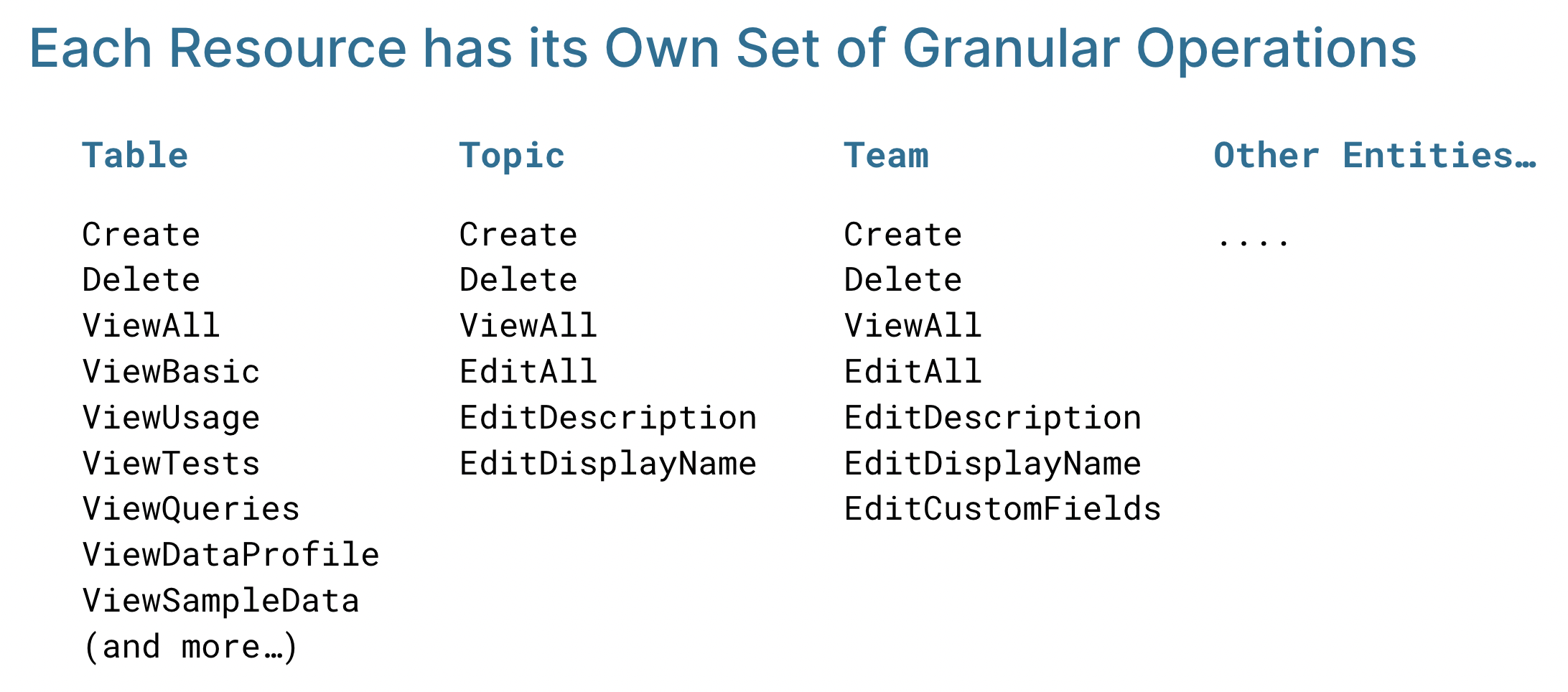
Quick Guide: Which Role Should I Start With?
Use this table when onboarding a new user to determine which base role to assign first.Building Blocks of Authorization: Rules, Policies, and Roles
Learn all the details of Rules, Policies, and Roles
Use Cases: Creating Roles & Policies in OpenMetadata
Tailor your policies to meet your organizational and team needs.