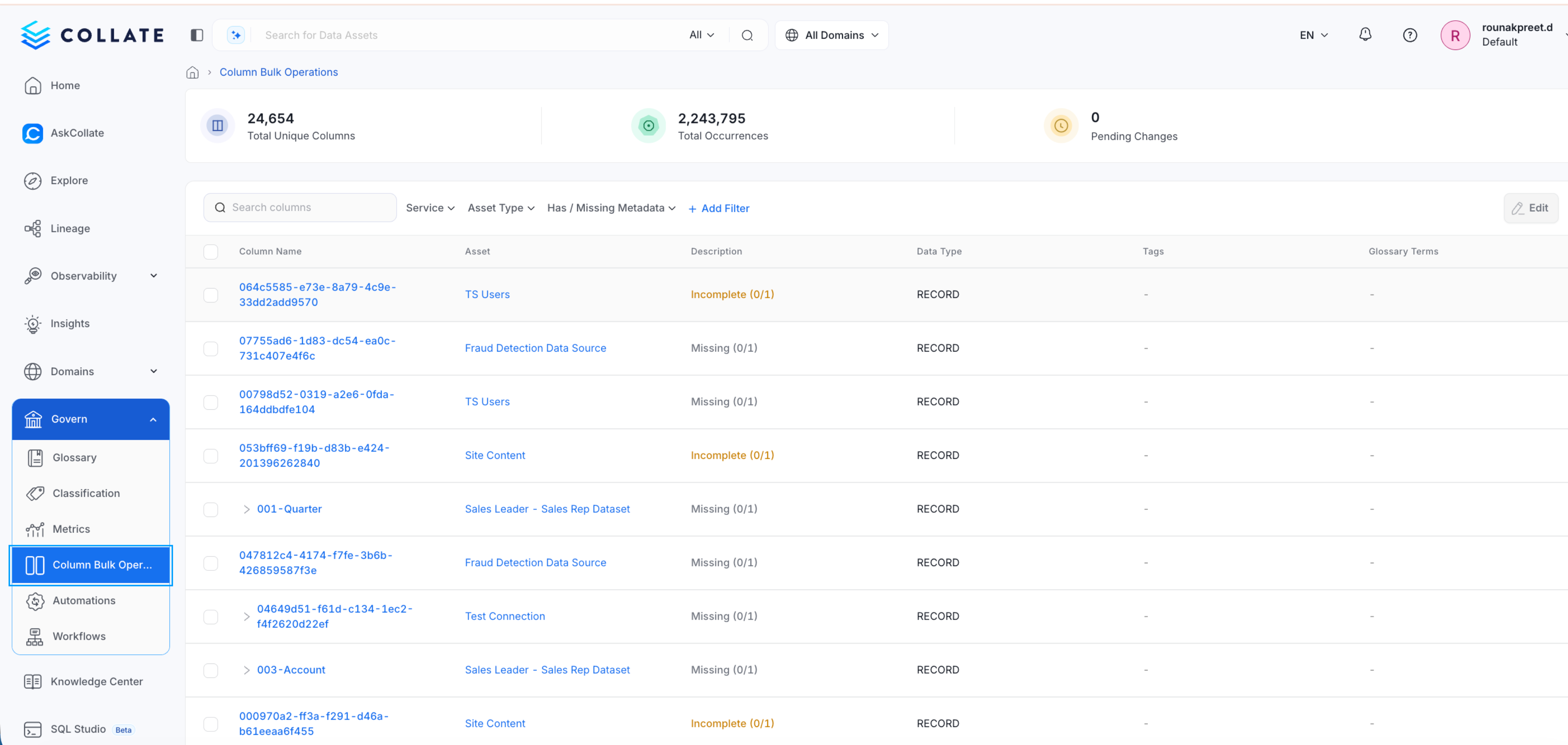
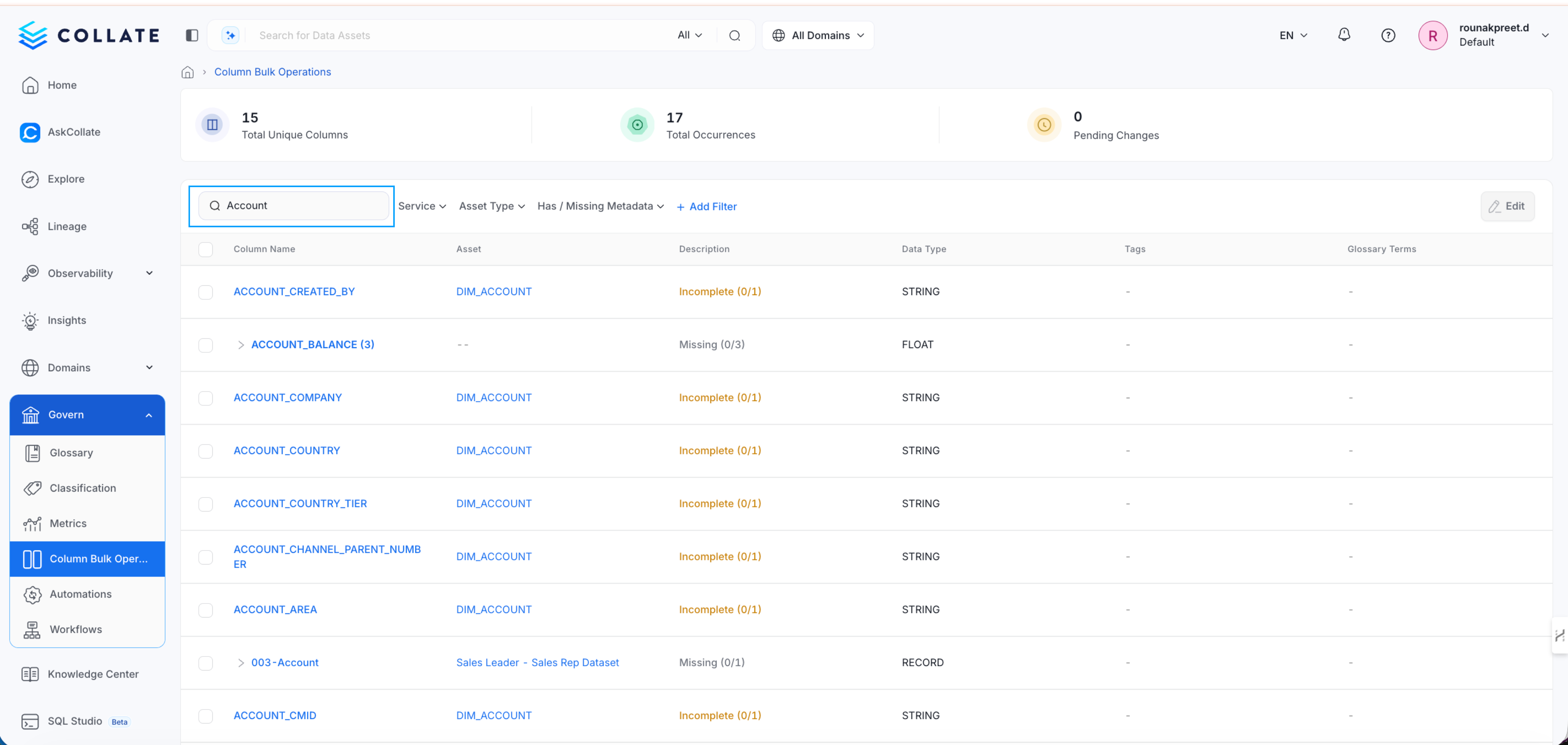
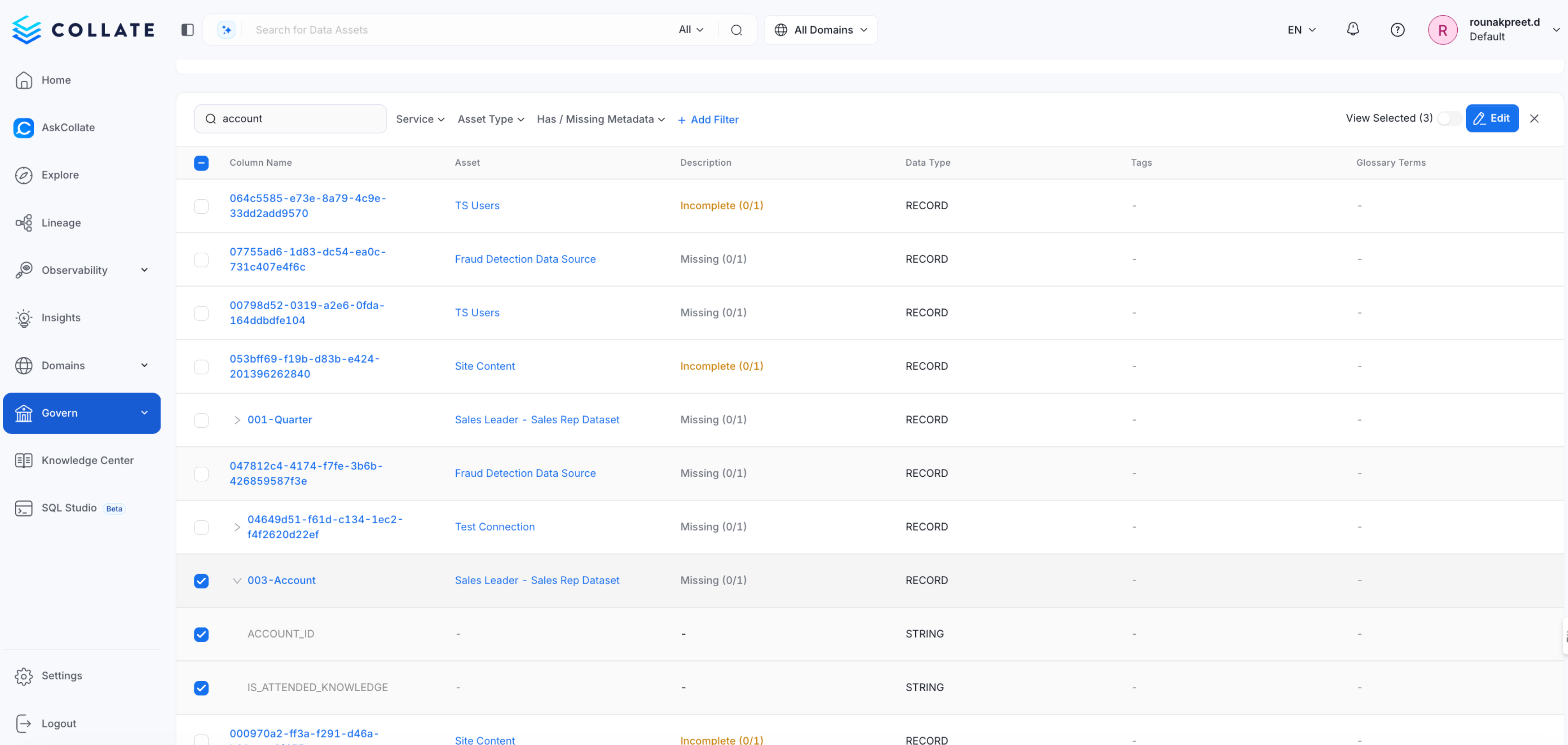
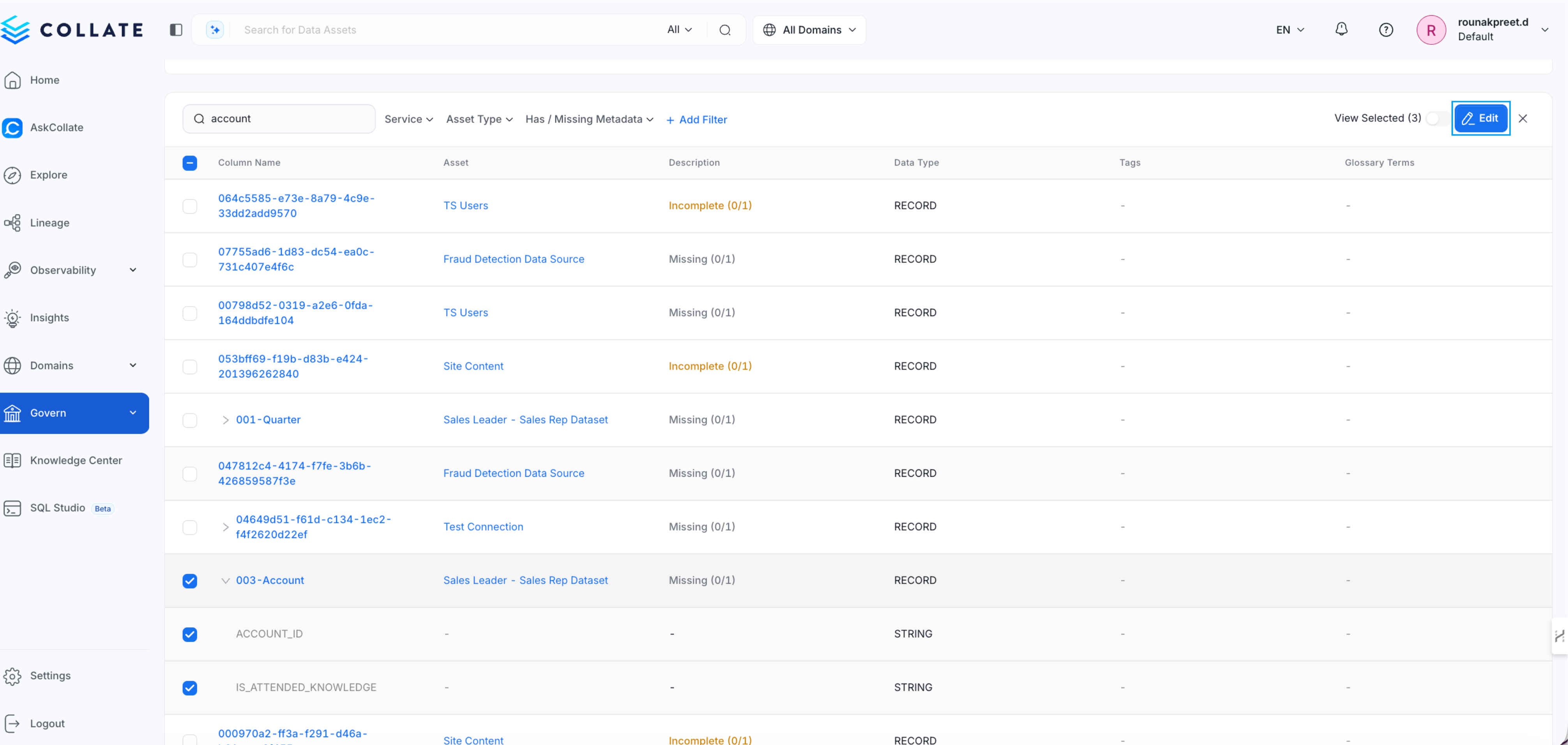
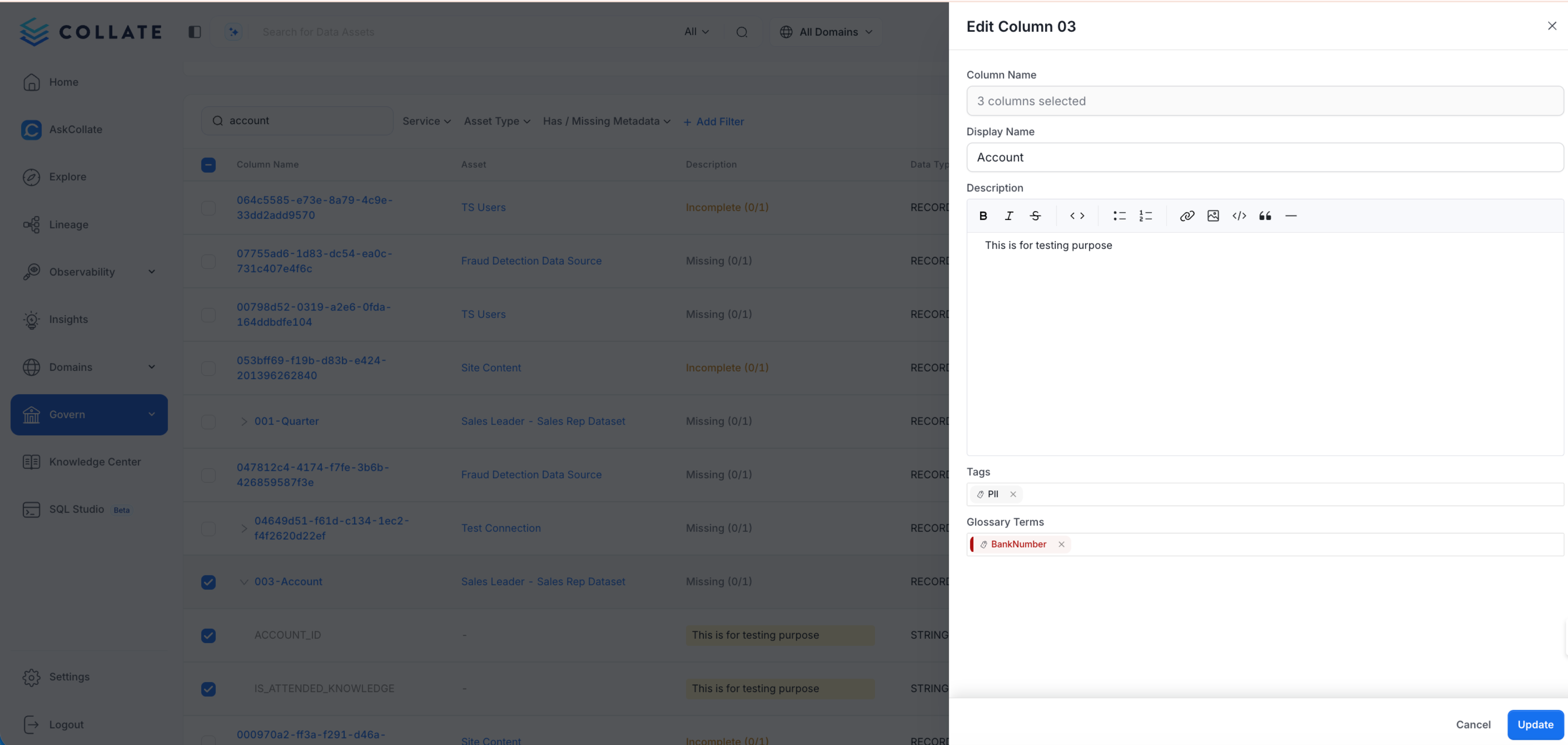
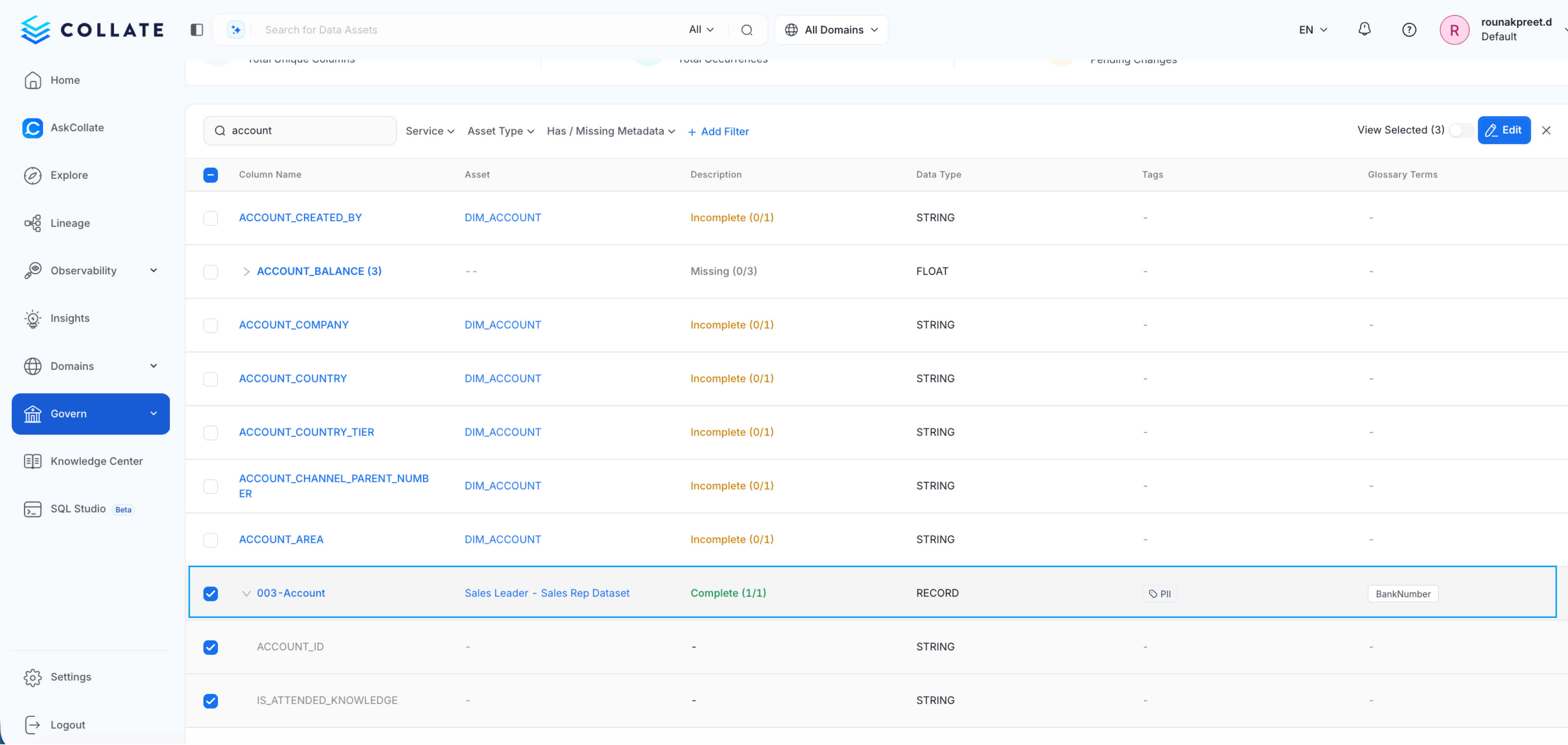
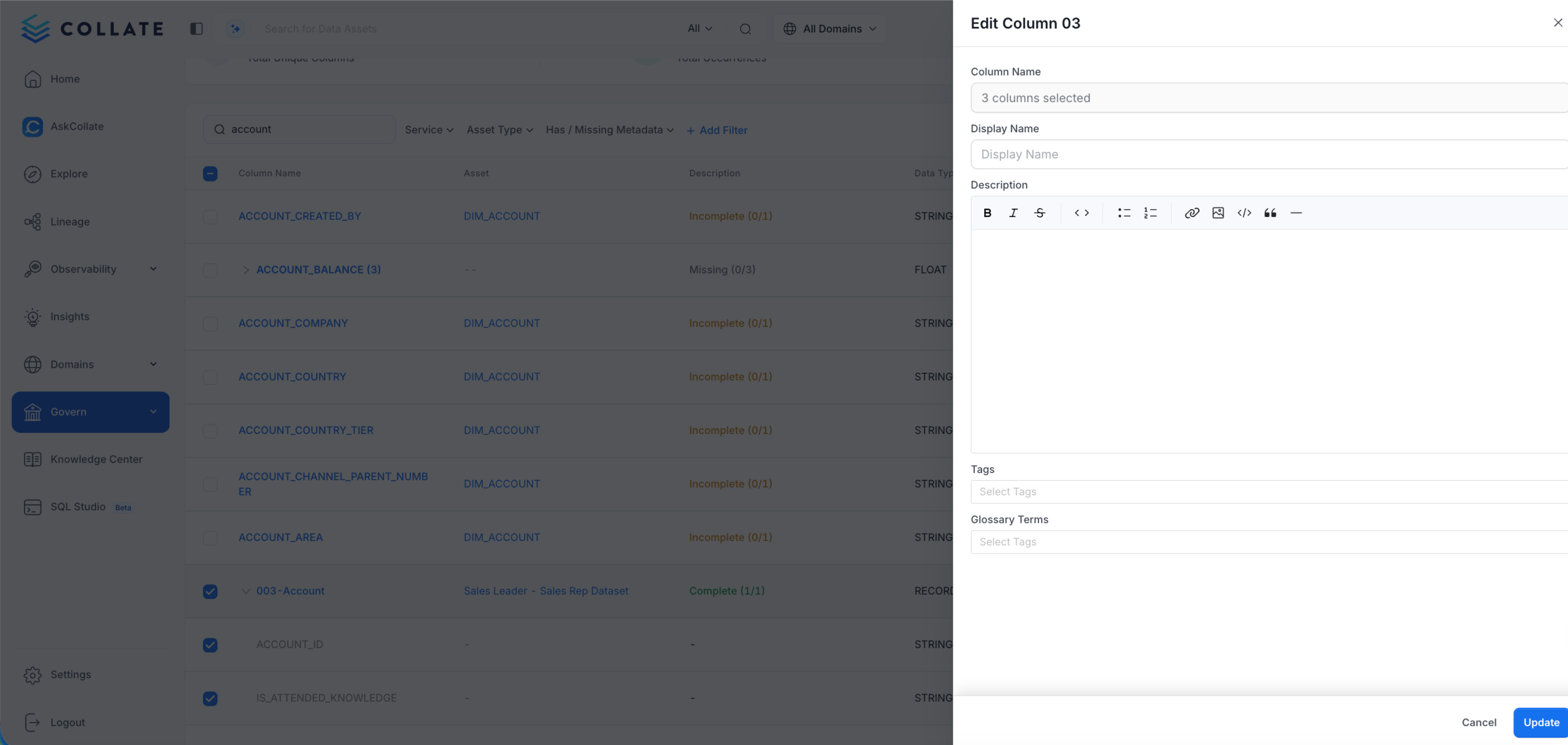
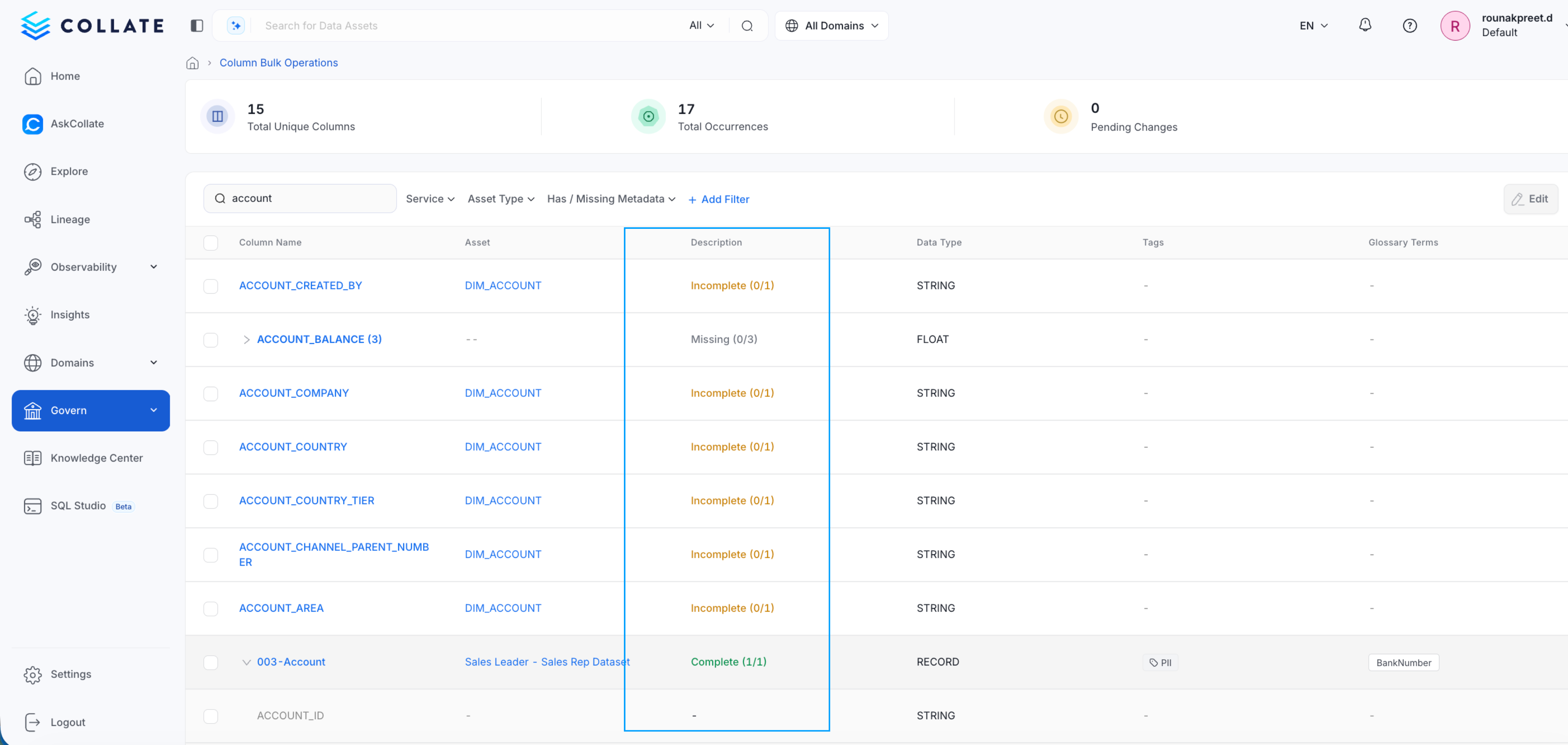
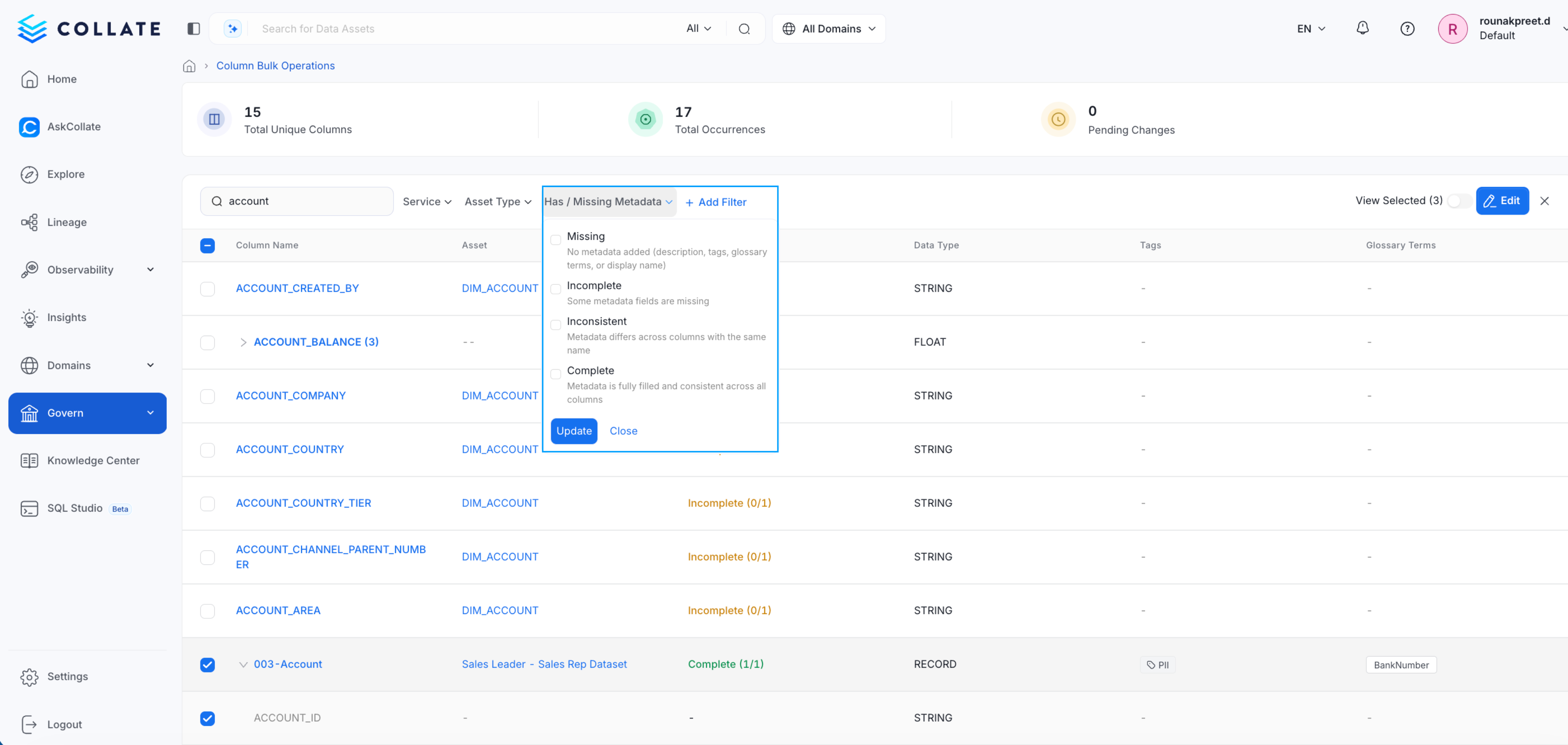
Update names, descriptions, tags, and glossary terms on matching columns across many tables with the deprecated Column Bulk Operations feature in OpenMetadata.
Deprecated: Column Bulk Operations is deprecated and will be removed in 2.2. The feature remains available until then, but reported defects will not be fixed.
Modern data platforms collect data from many systems. APIs generate application data. Databases such as MySQL, PostgreSQL, and Oracle store operational records. Data warehouses such as Snowflake or BigQuery power analytics. Files land in storage systems like S3. Search indexes also hold structured data.Across all these systems many columns represent the same concept. For example:
customer_id
customer_email
address
order_id
These columns can appear thousands of times across tables and services.Managing governance metadata for each instance individually becomes difficult. Teams must update descriptions, tags, and glossary terms one asset at a time.Column Bulk Operations solves this problem by identifying unique column names across the platform and allowing you to manage their metadata in one place. A single update can propagate across every instance of that column.
The feature groups columns by their name across the entire metadata platform.For example, a column named customer_id might appear in:
MySQL tables
PostgreSQL tables
Snowflake warehouse tables
Data lake tables
Search indexes
Although these columns live in different systems, they represent the same logical field. Column Bulk Operations treats them as a unique column group and allows you to manage them together.
Column Bulk Operations also works with lineage. As columns move through pipelines and transformations, the governance metadata remains consistent across the data flow. This ensures column definitions stay aligned even as data moves across systems.