

BigQuery
PRODFeature List
✓ Metadata
✓ Query Usage
✓ Lineage
✓ Column-level Lineage
✓ Data Profiler
✓ Data Quality
✓ dbt
✓ Tags
✓ Stored Procedures
✓ Sample Data
✓ Reverse Metadata (OpenMetadata Only)
✓ Auto-Classification
✕ Owners
How to Run the Connector Externally
To run the Ingestion via the UI you’ll need to use the OpenMetadata Ingestion Container, which comes shipped with custom Airflow plugins to handle the workflow deployment. If, instead, you want to manage your workflows externally on your preferred orchestrator, you can check the following docs to run the Ingestion Framework anywhere.Requirements
Python Requirements
To run the BigQuery ingestion, you will need to install:GCP Permissions
To execute metadata extraction and usage workflow successfully the user or the service account should have enough access to fetch required data. Following table describes the minimum required permissions| # | GCP Permission | Required For |
|---|---|---|
| 1 | bigquery.datasets.get | Metadata Ingestion |
| 2 | bigquery.tables.get | Metadata Ingestion |
| 3 | bigquery.tables.getData | Metadata Ingestion |
| 4 | bigquery.tables.list | Metadata Ingestion |
| 5 | resourcemanager.projects.get | Metadata Ingestion |
| 6 | bigquery.jobs.create | Metadata Ingestion |
| 7 | bigquery.jobs.listAll | Metadata Ingestion |
| 8 | bigquery.routines.get | Stored Procedure |
| 9 | bigquery.routines.list | Stored Procedure |
| 10 | datacatalog.taxonomies.get | Fetch Policy Tags |
| 11 | datacatalog.taxonomies.list | Fetch Policy Tags |
| 12 | bigquery.readsessions.create | Bigquery Usage & Lineage Workflow |
| 13 | bigquery.readsessions.getData | Bigquery Usage & Lineage Workflow |
Partitioned Tables
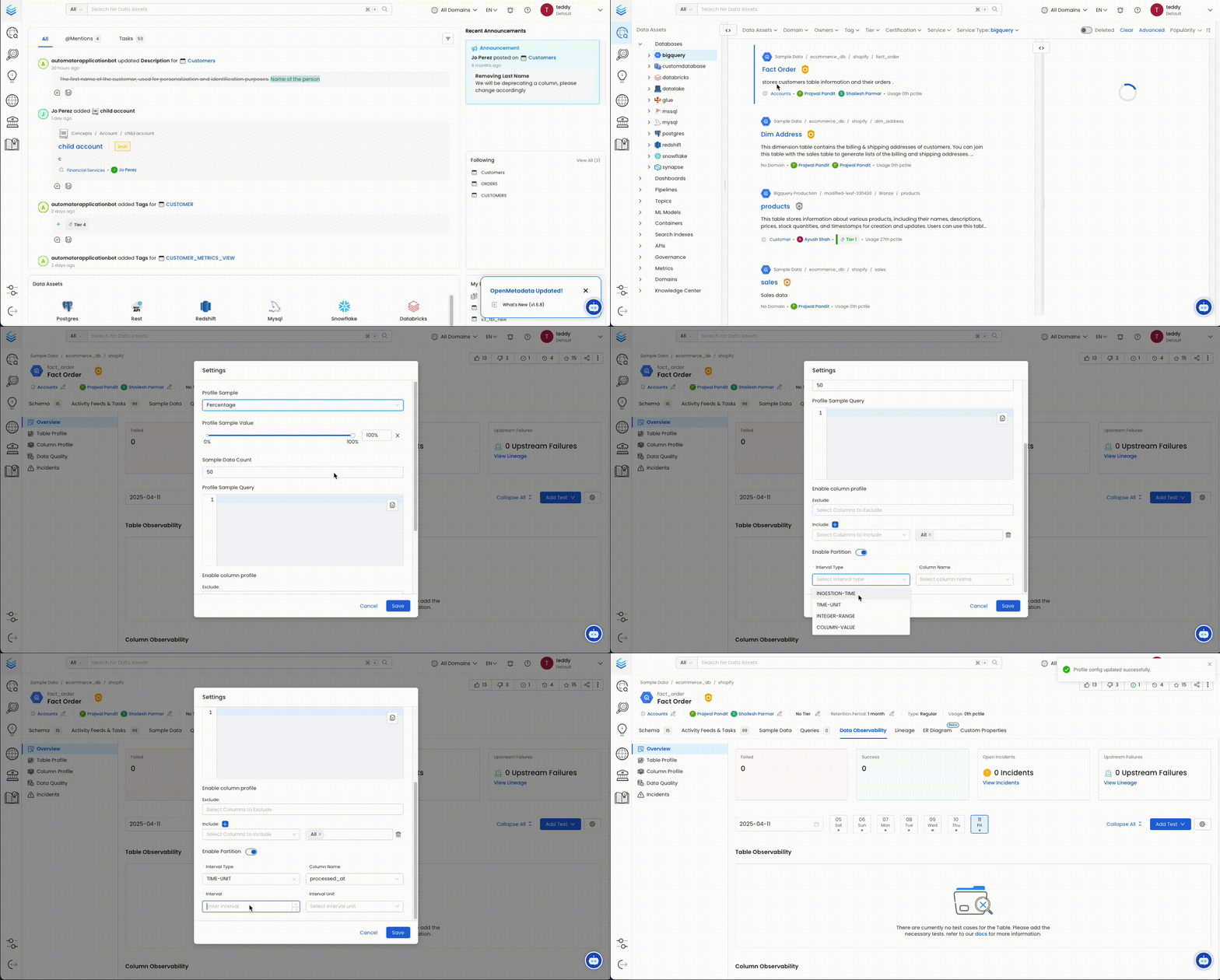
When profiling partitioned tables in BigQuery, OpenMetadata applies a default partition query duration of 1 day for time-based partitions. This conservative setting prevents excessive data scans but may result in no Sample Data or Column Profile Metrics if no data falls within the default window.Resolution
You can adjust this behavior directly from the UI:- Navigate to the table’s detail page.
- Edit the profiler configuration.
- Update the
partitionQueryDurationunder Partition Config to a wider window (e.g., 30 days) as needed.
Metadata Ingestion
1. Define the YAML Config
This is a sample config for BigQuery:2. Run with the CLI
First, we will need to save the YAML file. Afterward, and with all requirements installed, we can run:Query Usage
The Query Usage workflow will be using thequery-parser processor.
After running a Metadata Ingestion workflow, we can run Query Usage workflow.
While the serviceName will be the same to that was used in Metadata Ingestion, so the ingestion bot can get the serviceConnection details from the server.
1. Define the YAML Config
This is a sample config for Usage:2. Run with the CLI
After saving the YAML config, we will run the command the same way we did for the metadata ingestion:Lineage
After running a Metadata Ingestion workflow, we can run Lineage workflow. While theserviceName will be the same to that was used in Metadata Ingestion, so the ingestion bot can get the serviceConnection details from the server.
1. Define the YAML Config
This is a sample config for Lineage:- You can learn more about how to configure and run the Lineage Workflow to extract Lineage data from here
2. Run with the CLI
After saving the YAML config, we will run the command the same way we did for the metadata ingestion:Data Profiler
The Data Profiler workflow will be using theorm-profiler processor.
After running a Metadata Ingestion workflow, we can run the Data Profiler workflow.
While the serviceName will be the same to that was used in Metadata Ingestion, so the ingestion bot can get the serviceConnection details from the server.
1. Define the YAML Config
This is a sample config for the profiler:- You can learn more about how to configure and run the Profiler Workflow to extract Profiler data and execute the Data Quality from here
2. Run with the CLI
After saving the YAML config, we will run the command the same way we did for the metadata ingestion:ingest, we are using the profile command to select the Profiler workflow.
Auto Classification
The Auto Classification workflow will be using theorm-profiler processor.
After running a Metadata Ingestion workflow, we can run the Auto Classification workflow.
While the serviceName will be the same to that was used in Metadata Ingestion, so the ingestion bot can get the serviceConnection details from the server.
1. Define the YAML Config
This is a sample config for the Auto Classification Workflow:2. Run with the CLI
After saving the YAML config, we will run the command the same way we did for the metadata ingestion:Data Quality
Adding Data Quality Test Cases from yaml config
When creating a JSON config for a test workflow the source configuration is very simple.serviceName (this name needs to be unique) and entityFullyQualifiedName (the entity for which we’ll be executing tests against) keys.
Once you have defined your source configuration you’ll need to define te processor configuration.
"orm-test-runner". For accepted test definition names and parameter value names refer to the tests page.
You can keep your YAML config as simple as follows if the table already has tests.
Key reference:
forceUpdate: if the test case exists (base on the test case name) for the entity, implements the strategy to follow when running the test (i.e. whether or not to update parameters)testCases: list of test cases to add to the entity referenced. Note that we will execute all the tests present in the Table.name: test case nametestDefinitionName: test definitioncolumnName: only applies to column test. The name of the column to run the test againstparameterValues: parameter values of the test
sink and workflowConfig will have the same settings as the ingestion and profiler workflow.