
Add a Test Suite
Test Suites are logical containers that group related test cases from different tables, letting you set a single alert for test case failures. In the UI, this kind of test suite is called a Bundle Suite.You will need to make sure you have the right permission in OpenMetadata to create a test.
-
In the left navigation bar, select Observability > Data Quality.
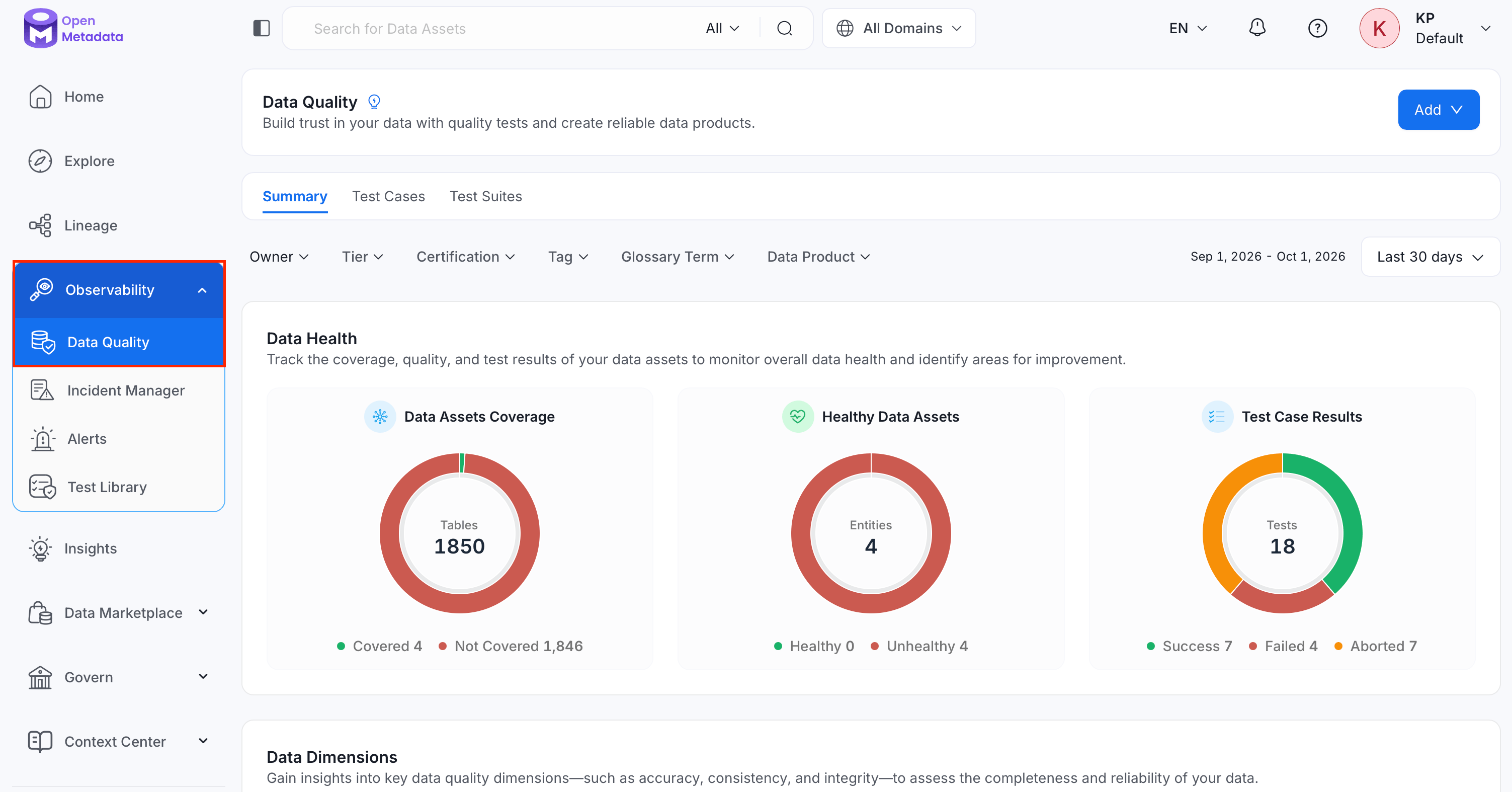
-
Click the Test Suites tab.
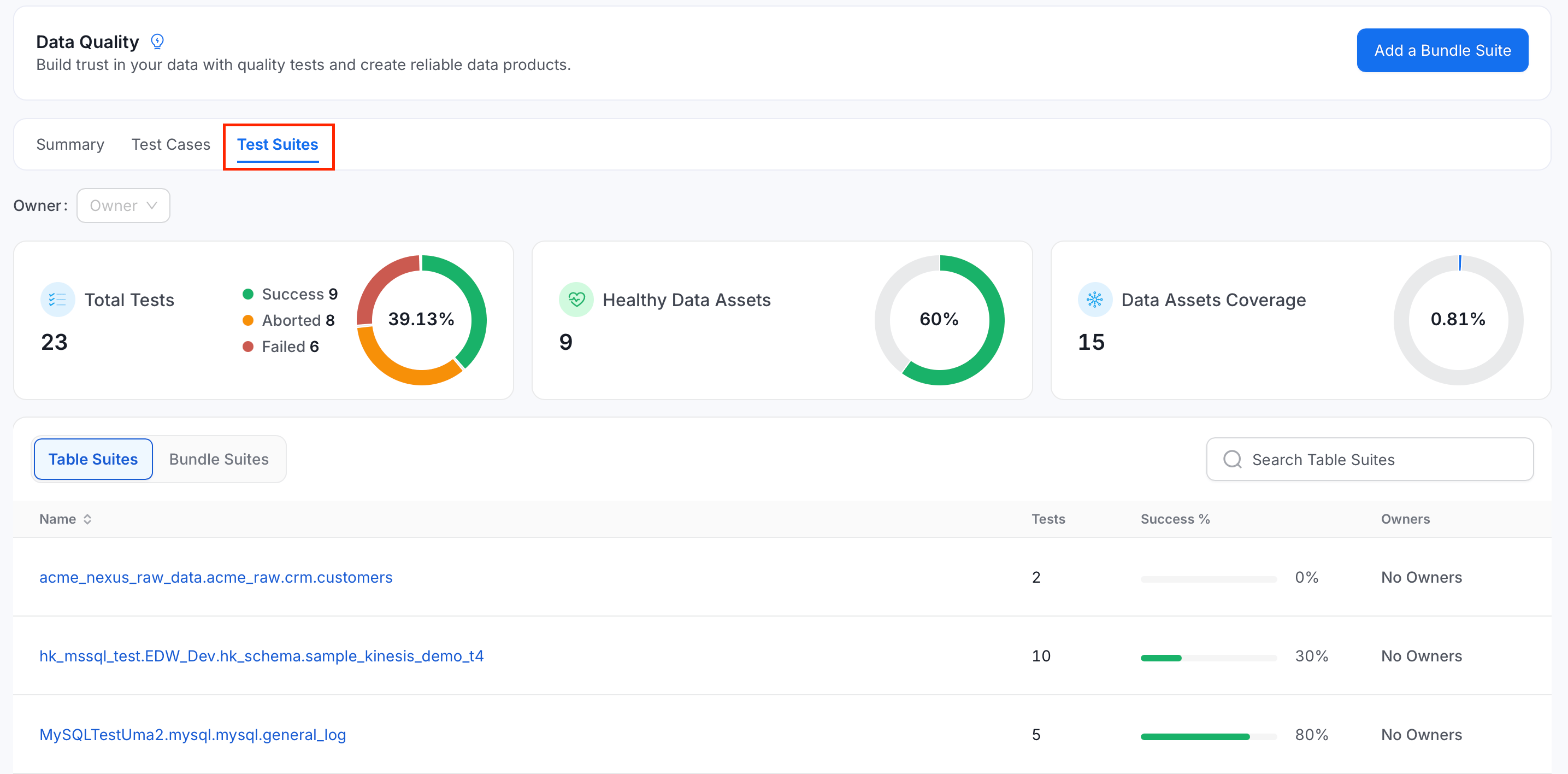
-
Click Add a Bundle Suite.
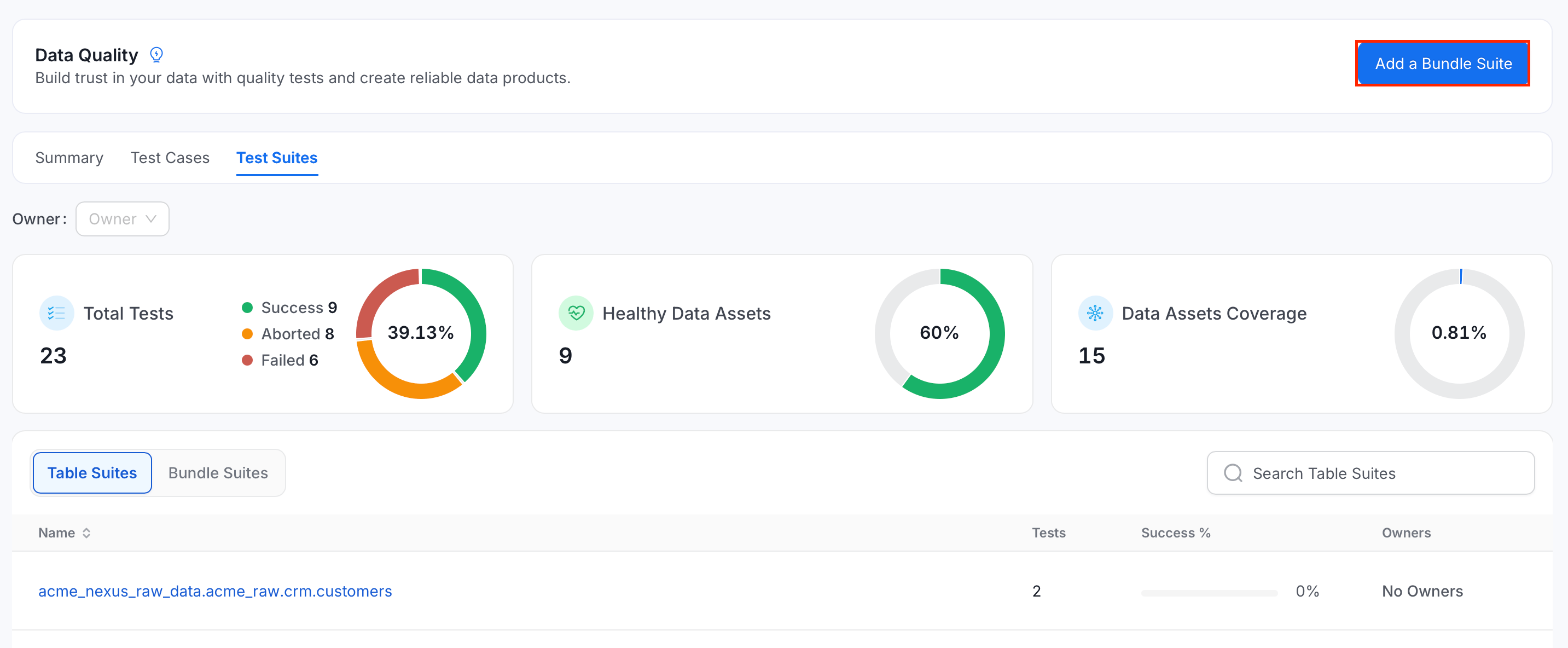
-
Fill in the following details:
- Enter a unique descriptive Name.
- Optional: Enter a Description.
- Search and select the test cases. In OpenMetadata 2.0.3 and later, Select All adds only the test cases matching the active filters.
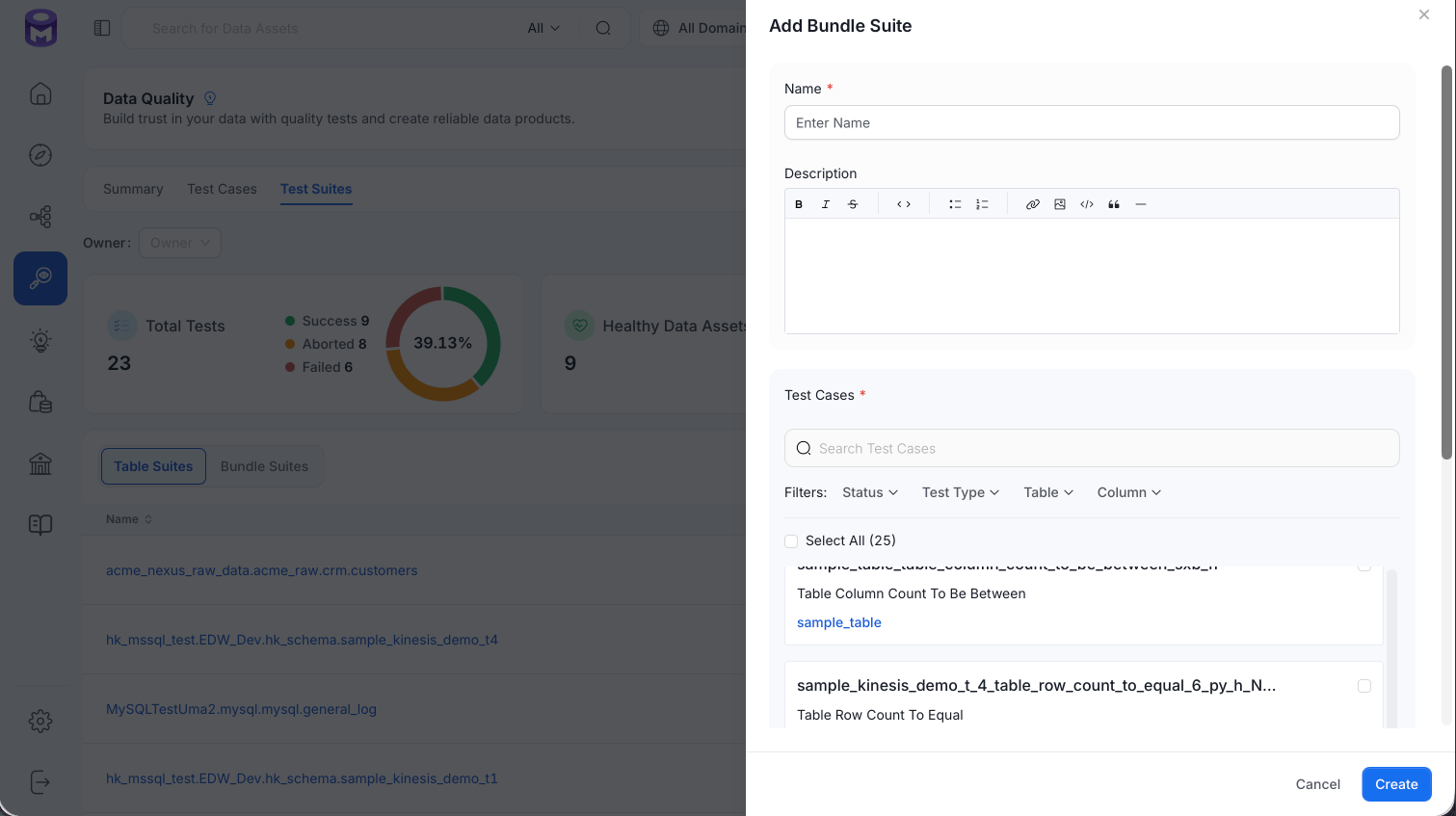
- Click Create.
Table Test Suites and Bundle Suites
OpenMetadata has two kinds of test suites. They differ in how they get their owners, which matters when you set up permissions.
Because of this, the owner of a table can manage that table’s test suite and test cases without extra setup, while the owner of a Bundle Suite doesn’t get any rights on the tables of the test cases it contains.
Let Owners View and Manage Their Tables’ Tests
By default,OrganizationPolicy-Owner-Rule gives owners full access to the assets they own. For a test case, OpenMetadata checks the owners of the table that the test case belongs to. If you removed or narrowed that rule, use this recipe to let owners view and manage the tests of their own tables:
-
Go to Settings > Access Control > Policies and click Add Policy. Name it
TableOwnerDataQuality. -
Add a rule with these settings:
- Add the policy to a role, and assign the role to your data owners or their team.
- Sign in as an owner, open one of their tables, and confirm that they can view, add, and edit its test cases.
The Permission Debugger doesn’t list the test case and test suite resources. To check these permissions, sign in as the user and try the action. For more information, see Permission Debugger.
Data Quality
Adding Data Quality Test Cases from yaml config
When creating a JSON config for a test workflow the source configuration is very simple.serviceName (this name needs to be unique) and entityFullyQualifiedName (the entity for which we’ll be executing tests against) keys.
Once you have defined your source configuration you’ll need to define te processor configuration.
"orm-test-runner". For accepted test definition names and parameter value names refer to the tests page.
You can keep your YAML config as simple as follows if the table already has tests.
Key reference:
forceUpdate: if the test case exists (base on the test case name) for the entity, implements the strategy to follow when running the test (i.e. whether or not to update parameters)testCases: list of test cases to add to the entity referenced. Note that we will execute all the tests present in the Table.name: test case nametestDefinitionName: test definitioncolumnName: only applies to column test. The name of the column to run the test againstparameterValues: parameter values of the test
sink and workflowConfig will have the same settings as the ingestion and profiler workflow.