
Customizable Landing Page with Pluggable Panels
OpenMetadata’s customizable landing page allows admins to tailor the layout based on the user’s persona, providing a more relevant and enriched experience. The landing page is built using pluggable panels, which can be added, removed, or rearranged to meet the unique needs of different personas, such as data scientists, data engineers, or data stewards.Customize App Layout
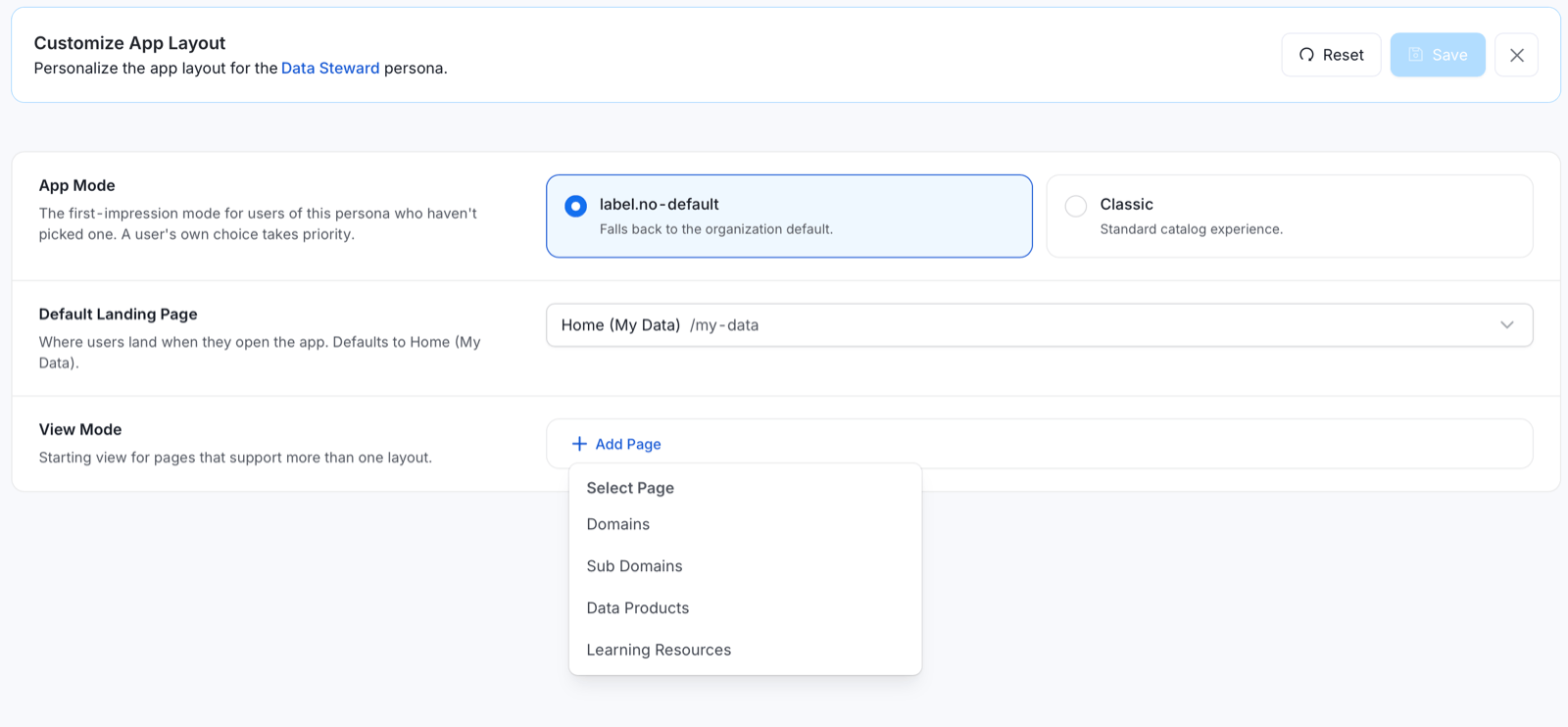
Use the App Layout category on a persona to set the app mode, the default landing page, and the starting view for pages that offer more than one layout. Changes apply to every user assigned to the persona. To open these settings:-
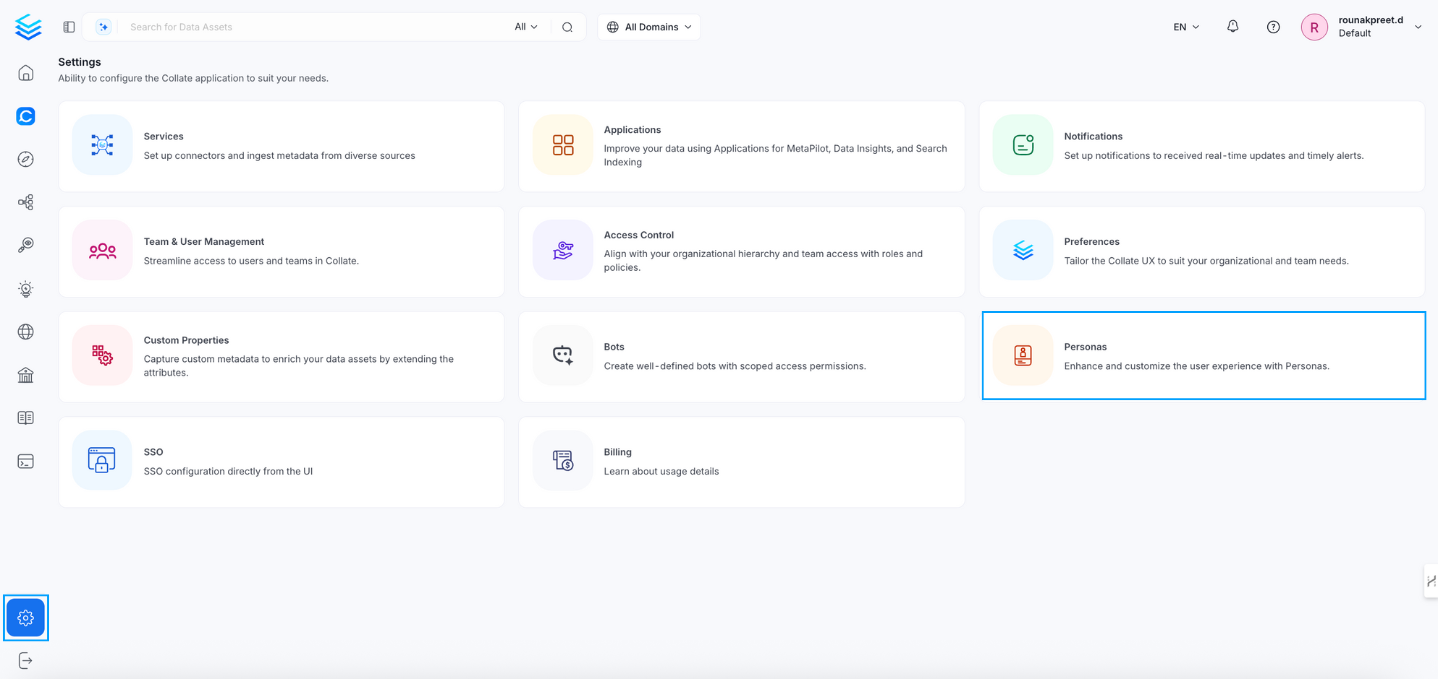
Navigate to Settings > Personas.
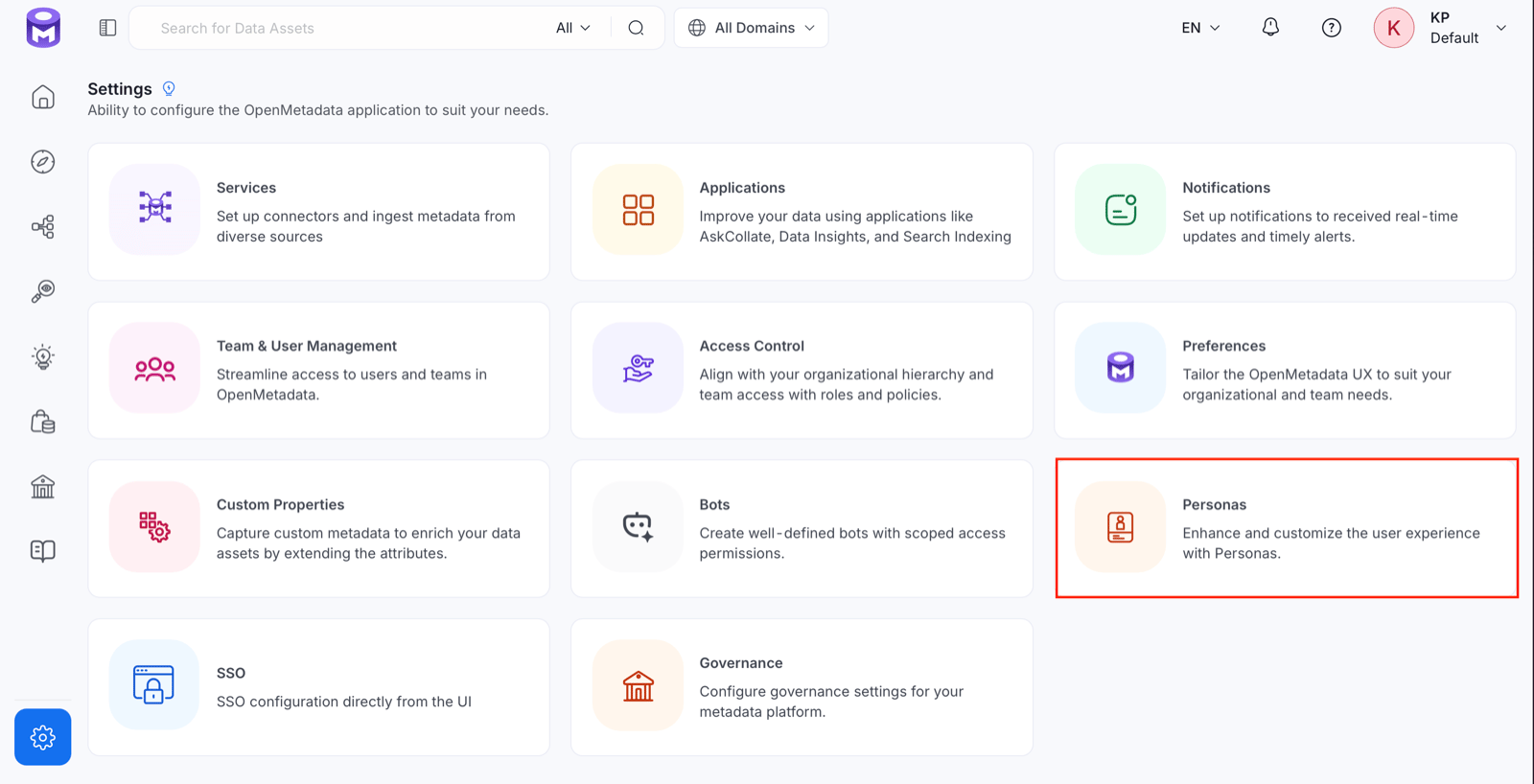
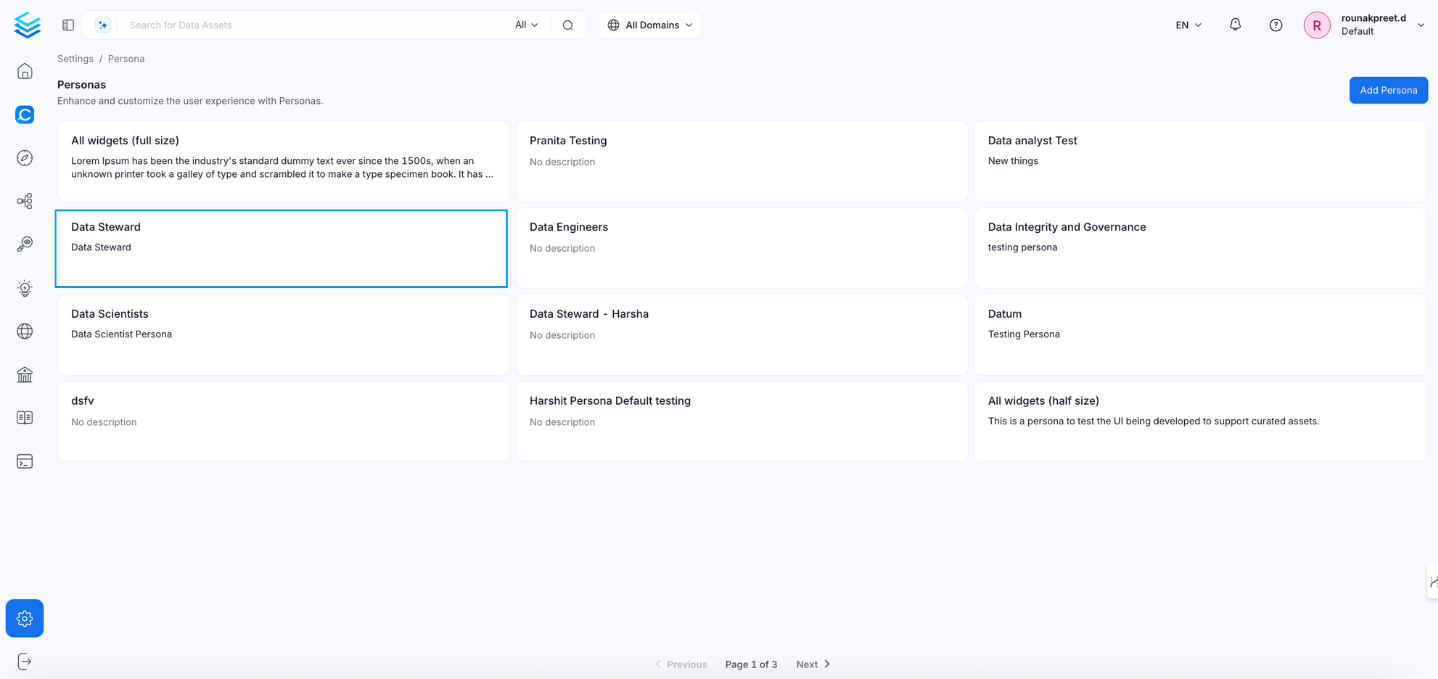
- Select a persona.
-
Click the Customize UI tab.
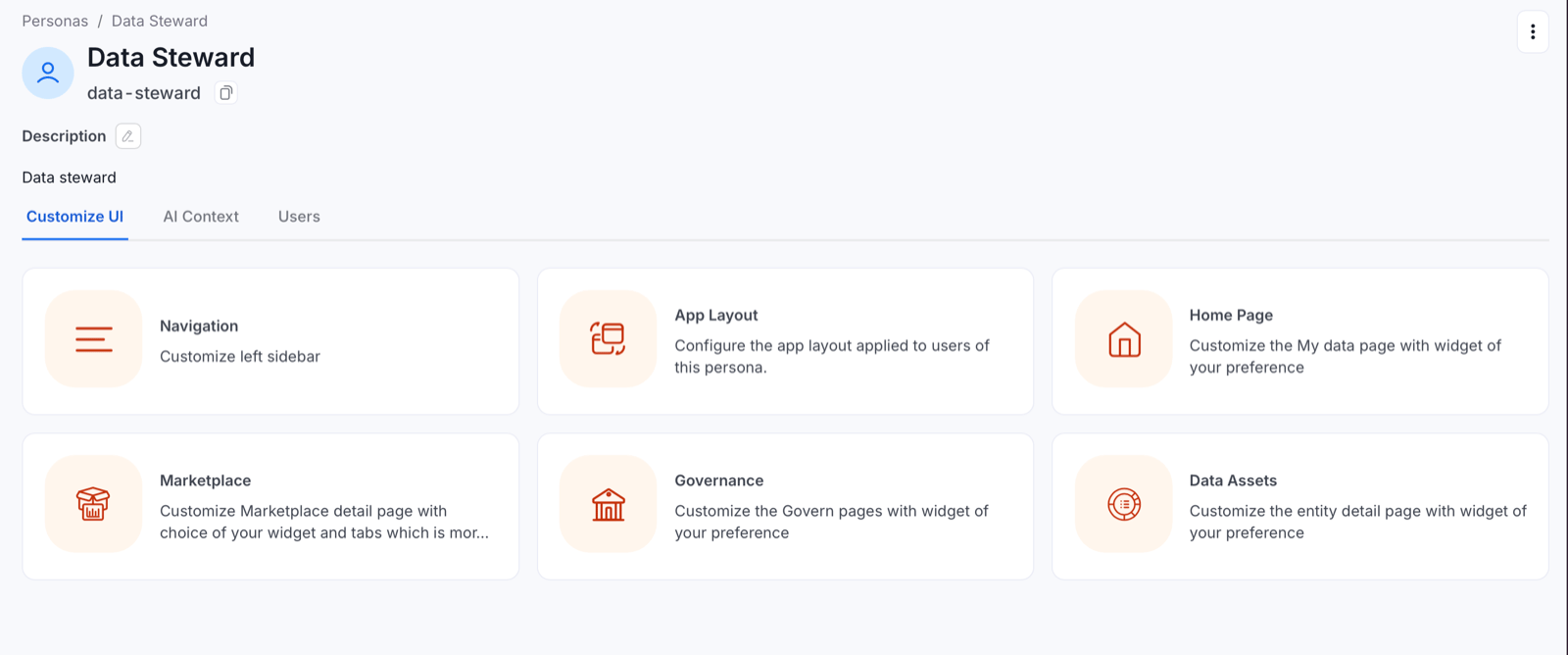
- Click the App Layout card.
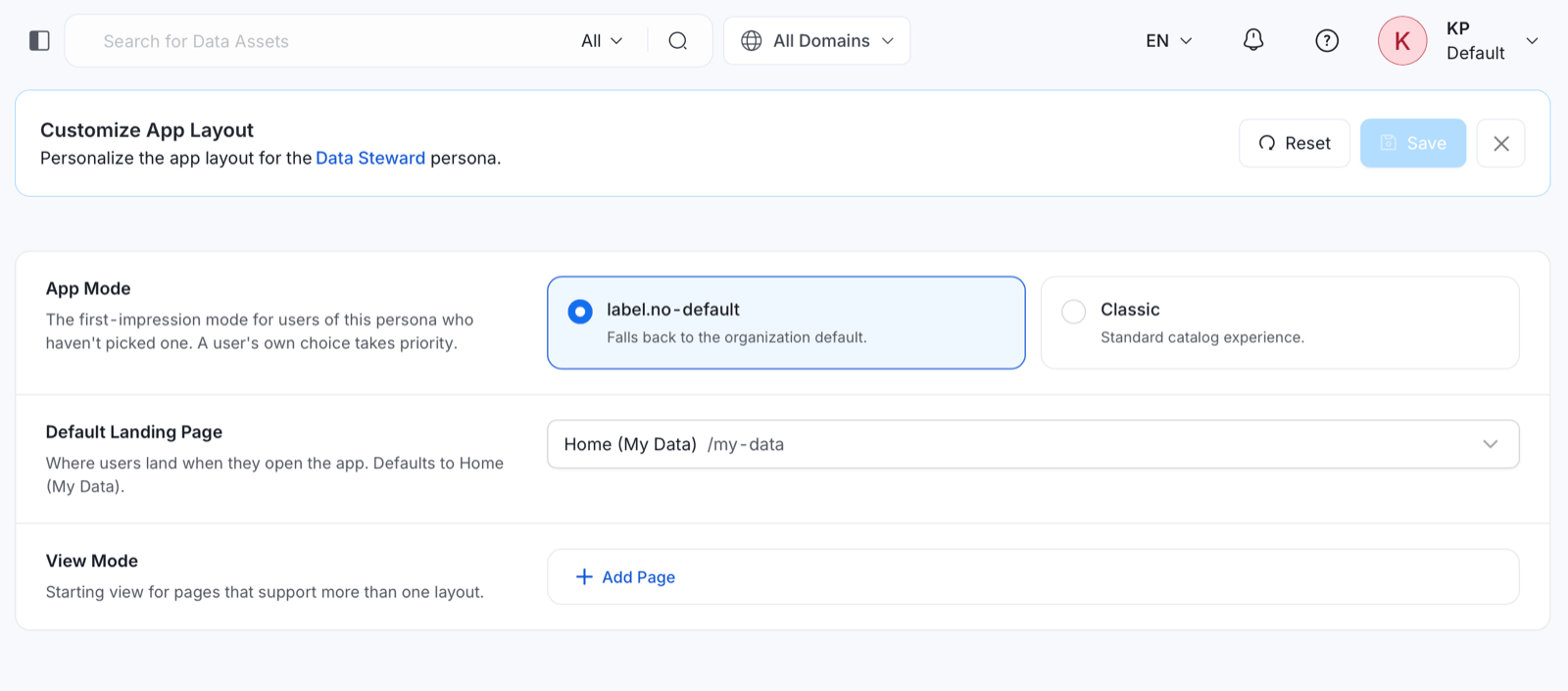
App Mode
Use App Mode to choose the experience users of this persona see when they open the app and haven’t picked an app mode themselves. A user’s own app mode choice takes priority over the persona setting.- No default: Uses the organization default.
- Classic (deprecated): Uses the standard catalog experience. For more information, see Default App Mode.
- AI: Starts in the AI assistant.
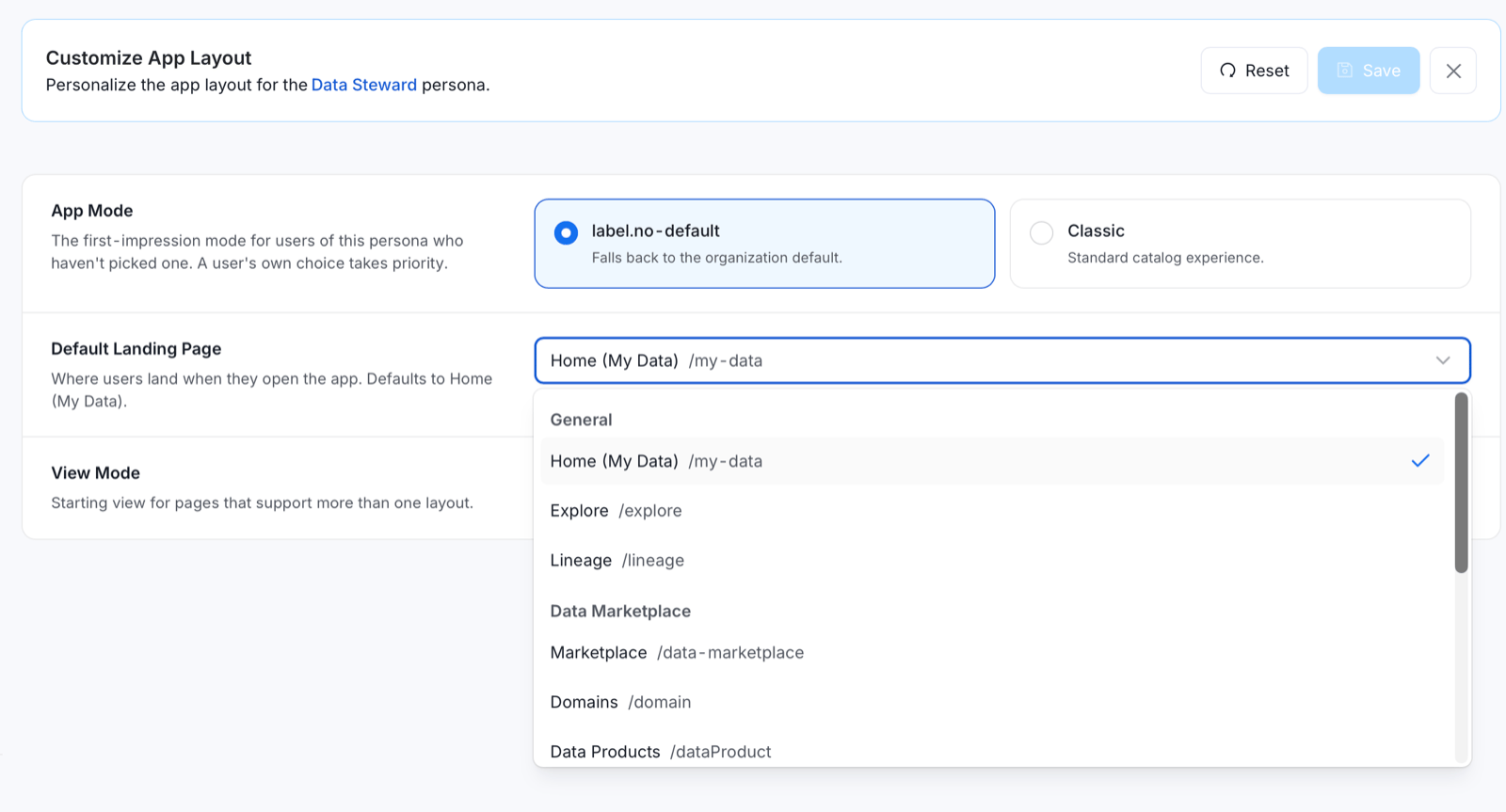
Default Landing Page
Use Default Landing Page to choose where users of this persona land when they open the app. The default is Home (My Data). Select one of the following pages from the dropdown:- General: Home (My Data), Explore, and Lineage.
- Data Marketplace: Marketplace, Domains, and Data Products.
- Observability: Data Quality, Incident Manager, and Insights.
- Govern: Glossary, Classification, and Metrics.
View Mode
Use View Mode to set the starting view for pages that offer more than one layout. Pages without a setting open in Table view. To set a starting view:- Click Add Page.
- Select a page.
- Choose its view.
- Domains: Table, Grid, or Tree.
- Sub Domains: Table or Grid.
- Data Products: Table or Grid.
- Learning Resources: Table or Grid.
How to Customize a Landing Page:
- Set Up Personas: After defining personas, navigate to Settings > Persona.
- Select a Persona: Customize a landing page for a specific persona (e.g., data steward) and then select homepage to customize it.
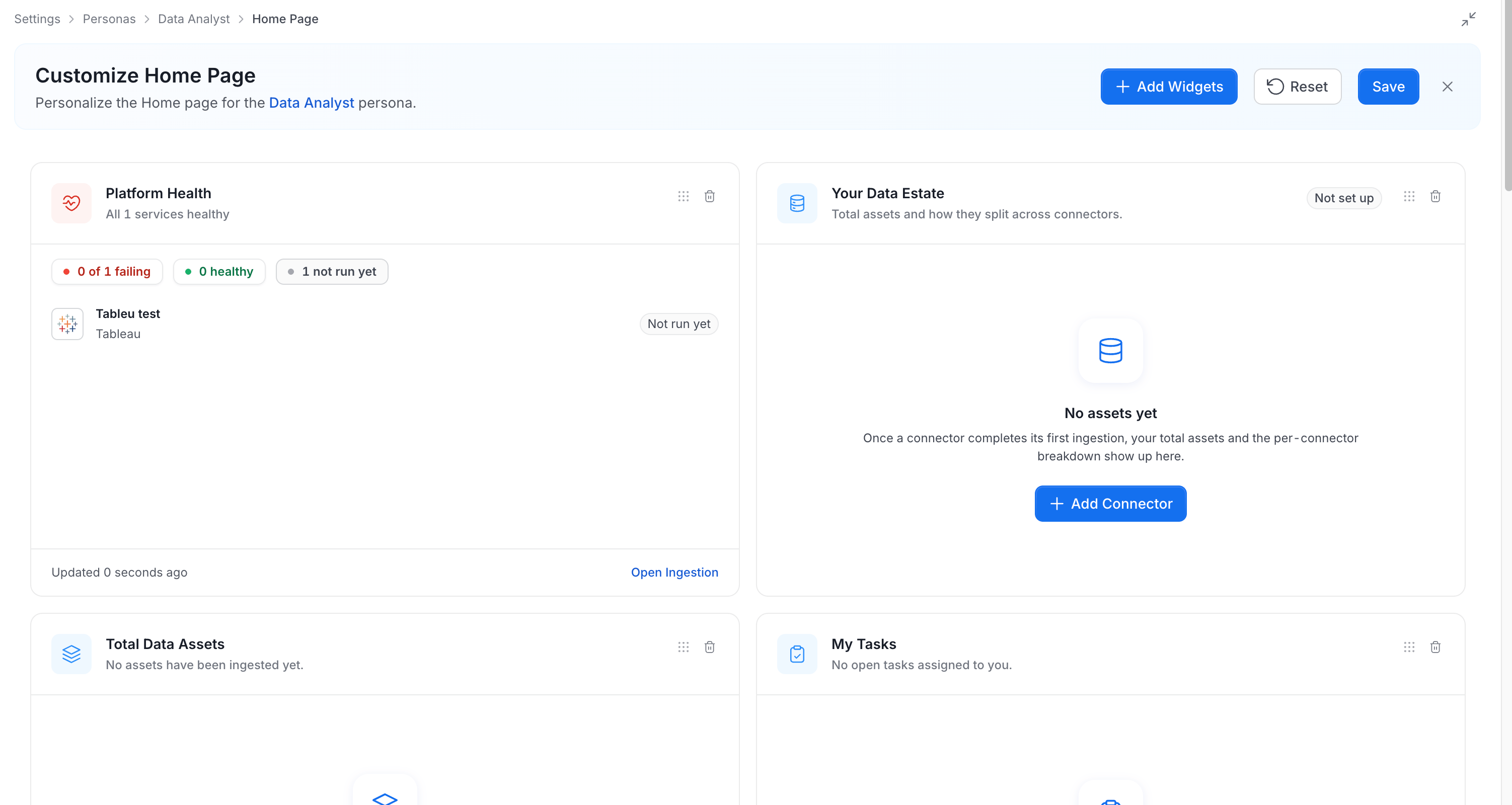
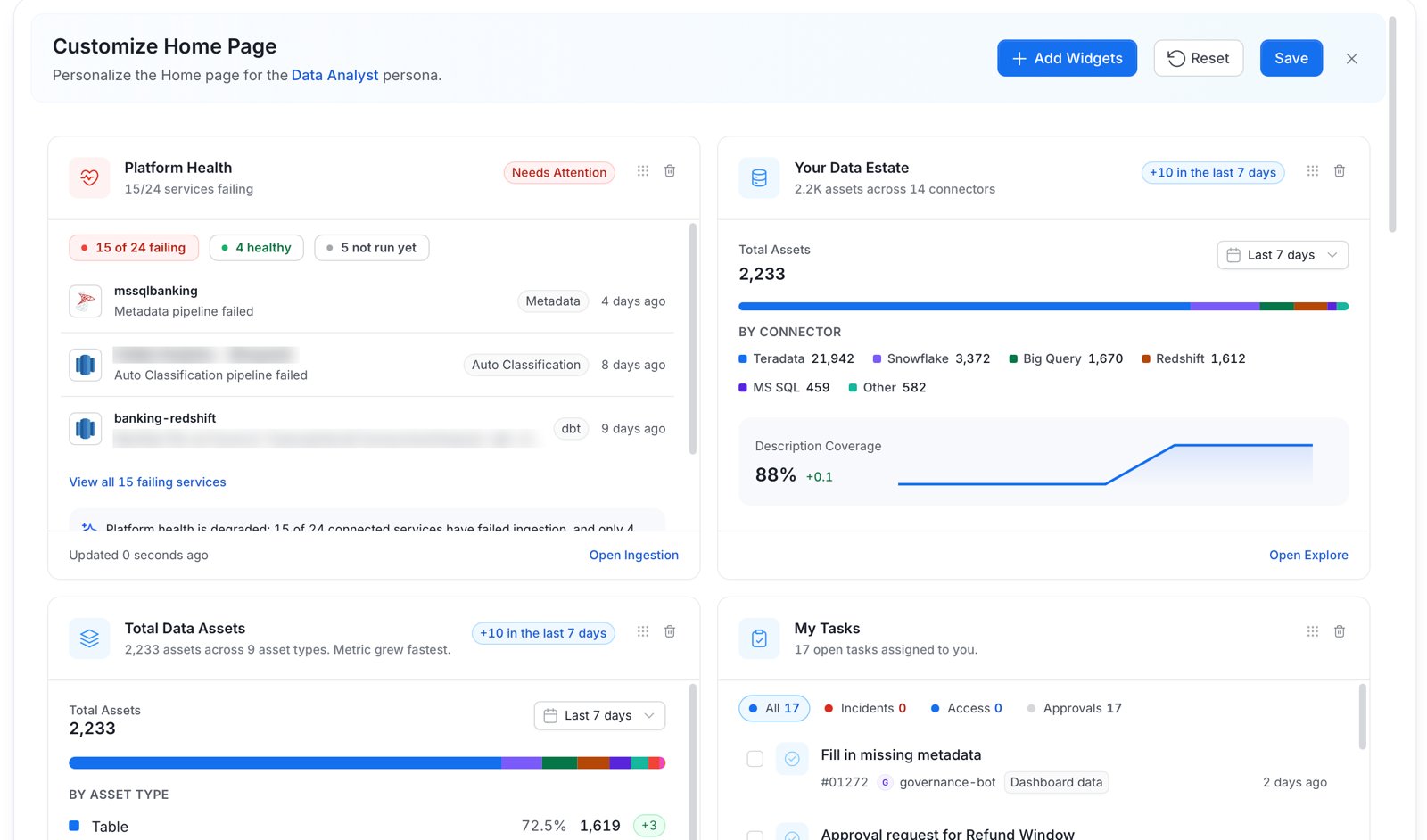
- Add Widgets: In the Customize Home Page editor, click Add Widgets.
- Select Widgets: In the Customize Home dialog, select All Widgets, select the widgets to show, and click Apply. A tick marks a widget that is already on the page. The dialog lists only widgets that can be shown.
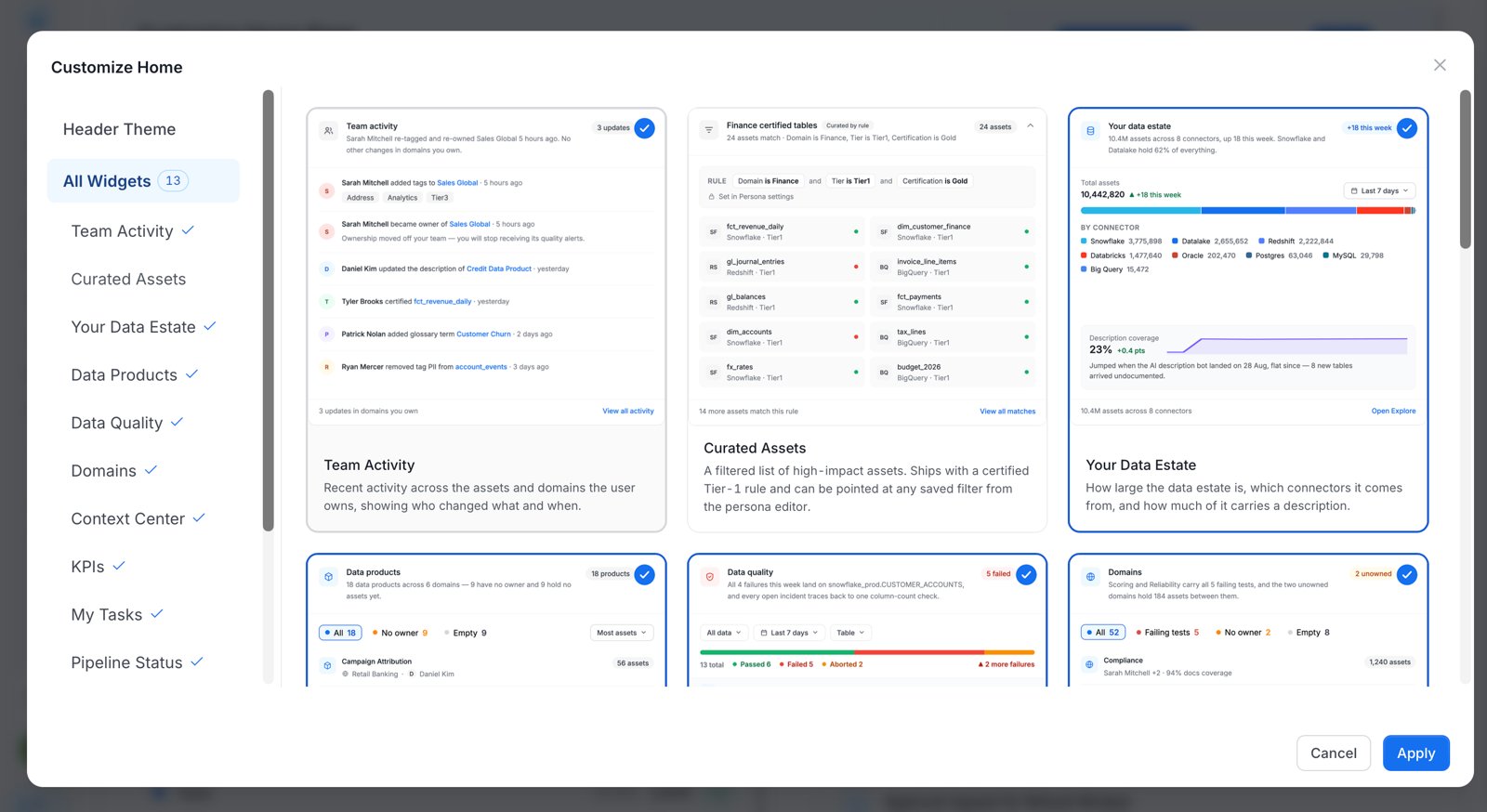
- Header Theme: Optional: in the Customize Home dialog, select Header Theme to preview the home page header and select its background color.
- Rearrange and Save: Drag a widget by its handle to change its position, or click the trash icon to remove it. Click Save to apply the layout, or Reset to discard your changes.
Available Widgets
The following widgets are available:Example Use Case:
For a data scientist, the KPIs widget may be removed, while prioritizing Yours and Followed and Team Activity. A data engineer might add the Pipeline Status widget, while a data steward might include widgets focused on data governance, such as Domains and Data Products.Full-Page Editor
In AI mode, customizing the Home Page and the entity pages under Governance and Data Assets opens a full-page editor. The other categories open in the modal.- The breadcrumb starts at Settings > Personas and shows the persona and the page you are editing.
- The header has Add Widgets, Reset, and Save, and a close icon to leave the editor.
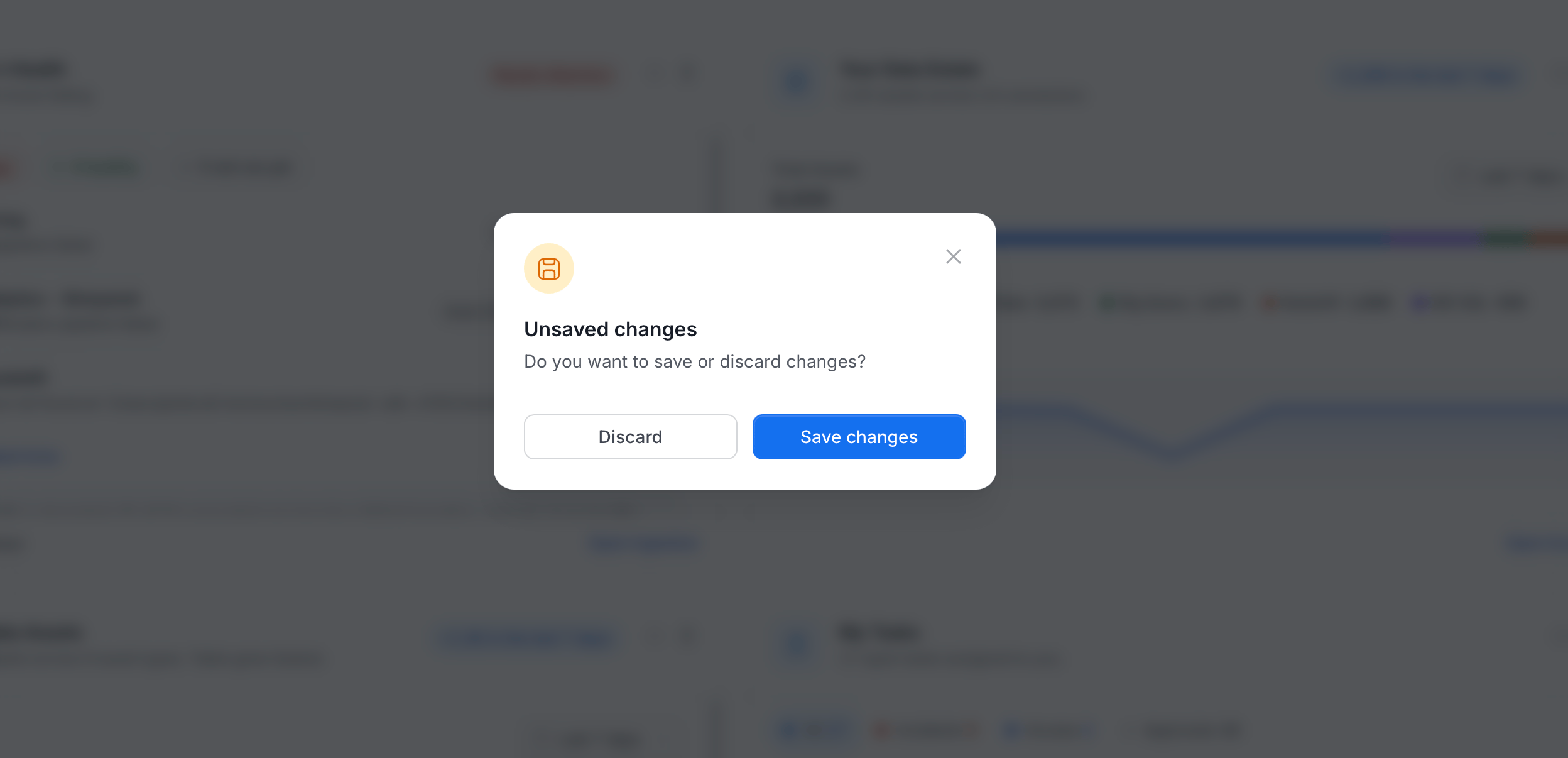
- If you exit with unsaved changes, an Unsaved changes prompt asks whether to save or discard them. Click Save changes or Discard. If you have no unsaved changes, you leave without a prompt.
Customize Glossary Pages
The Review tab, where reviewers decide on glossary term proposals, is a customizable tab of the Glossary page. For a persona, rename, move, or hide it.-
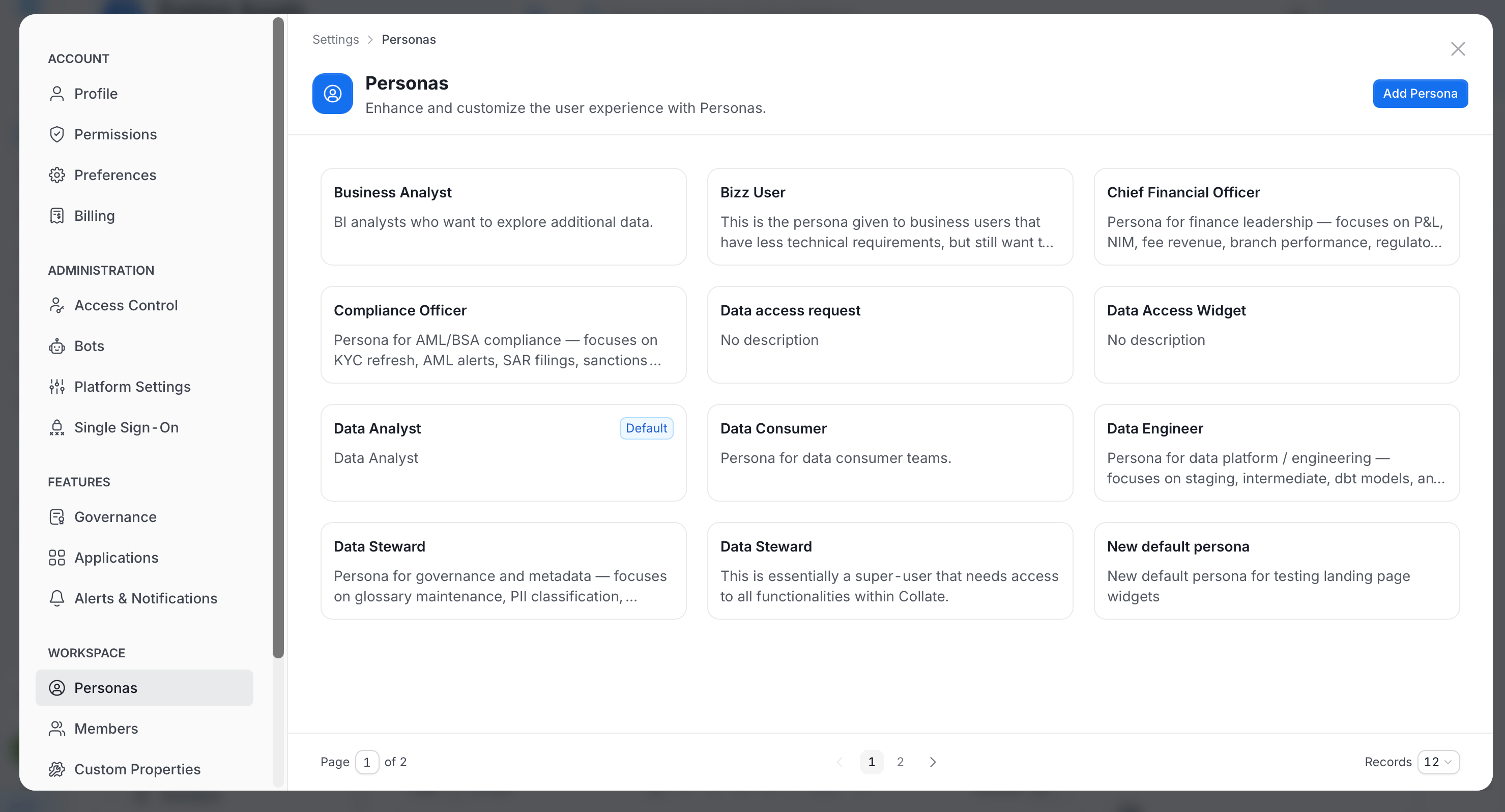
Click the Profile icon and navigate to Settings > Personas, then select the persona.
-
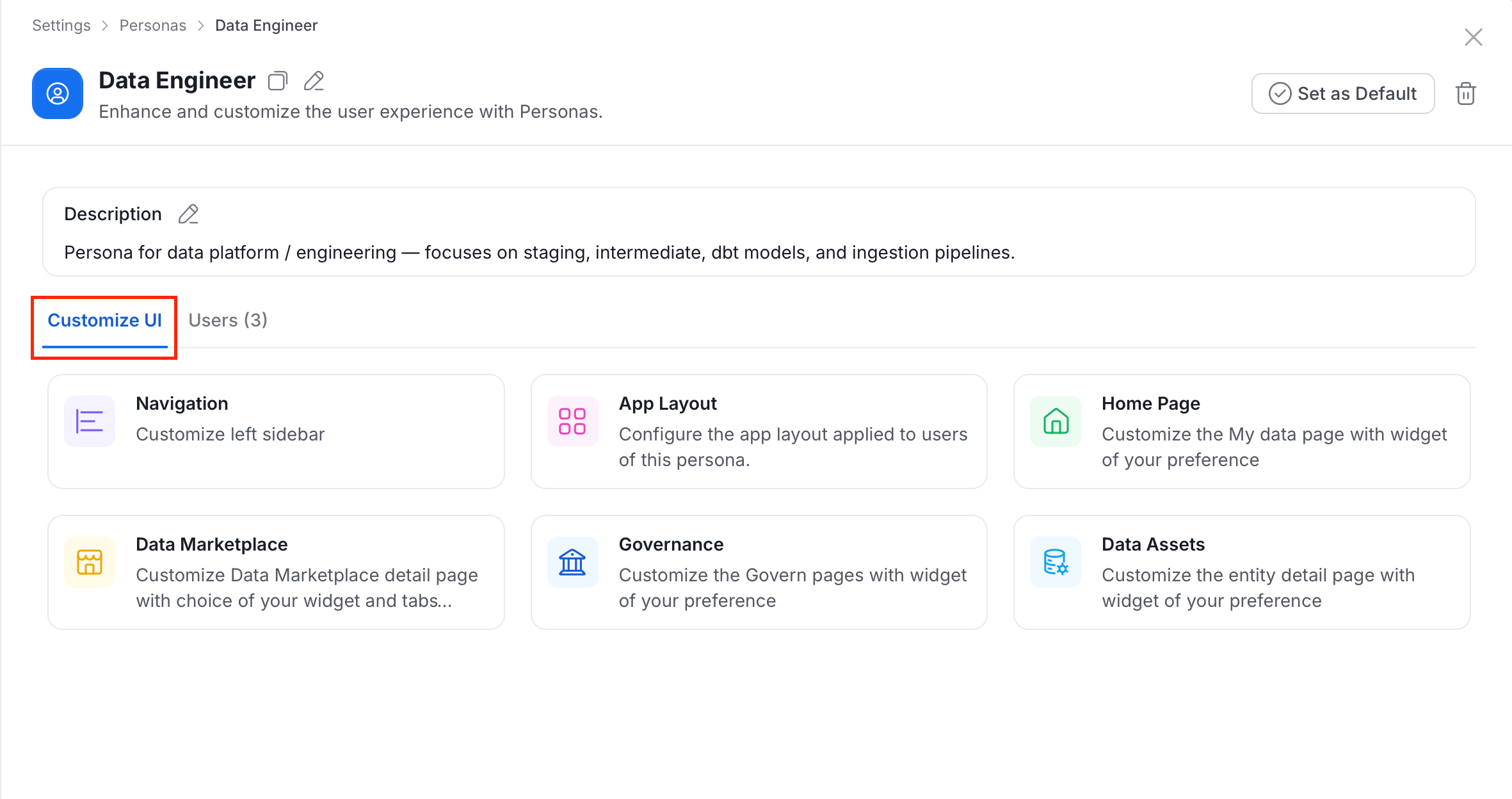
On the Customize UI tab, click the Governance card.
-
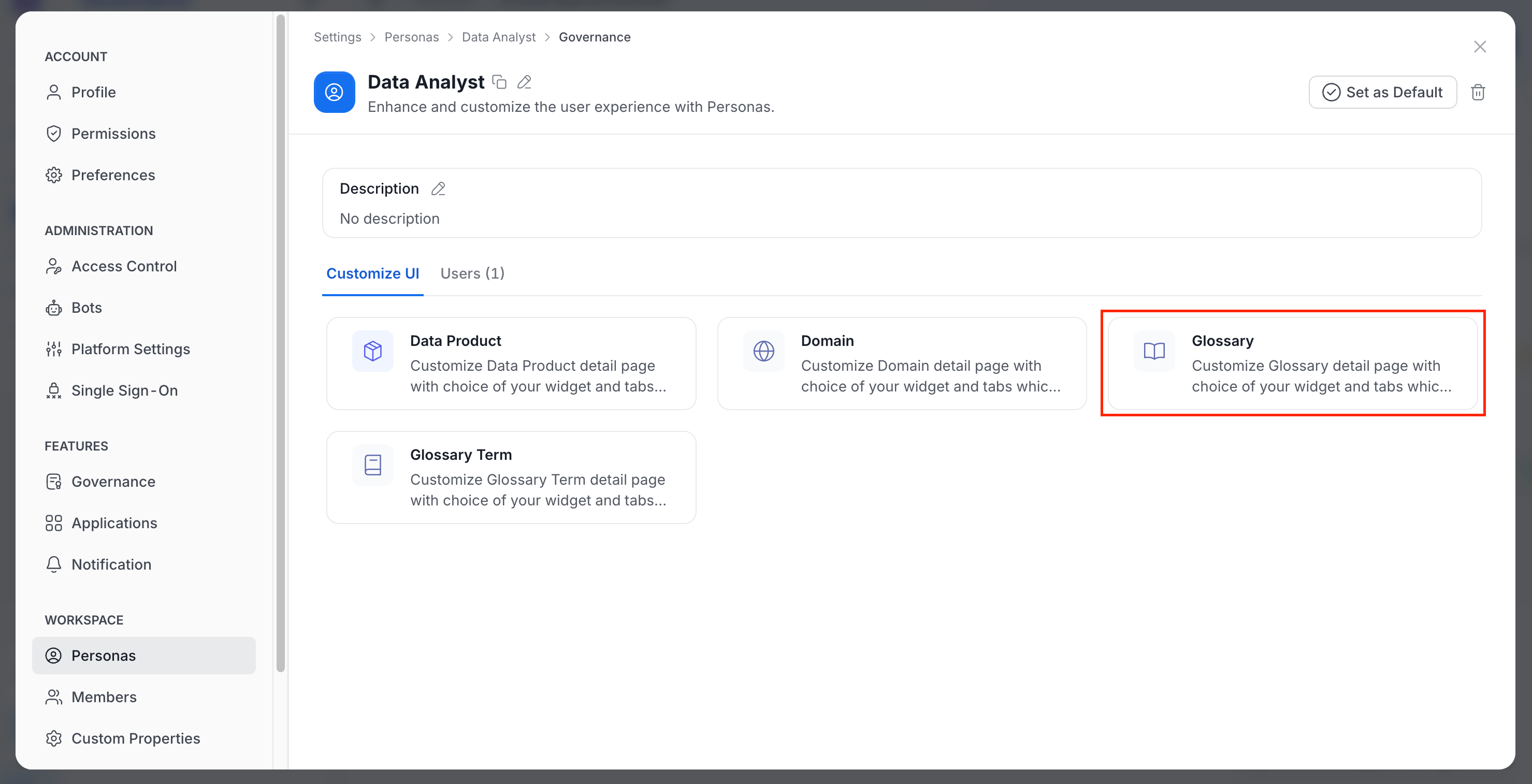
Click the Glossary card.
-
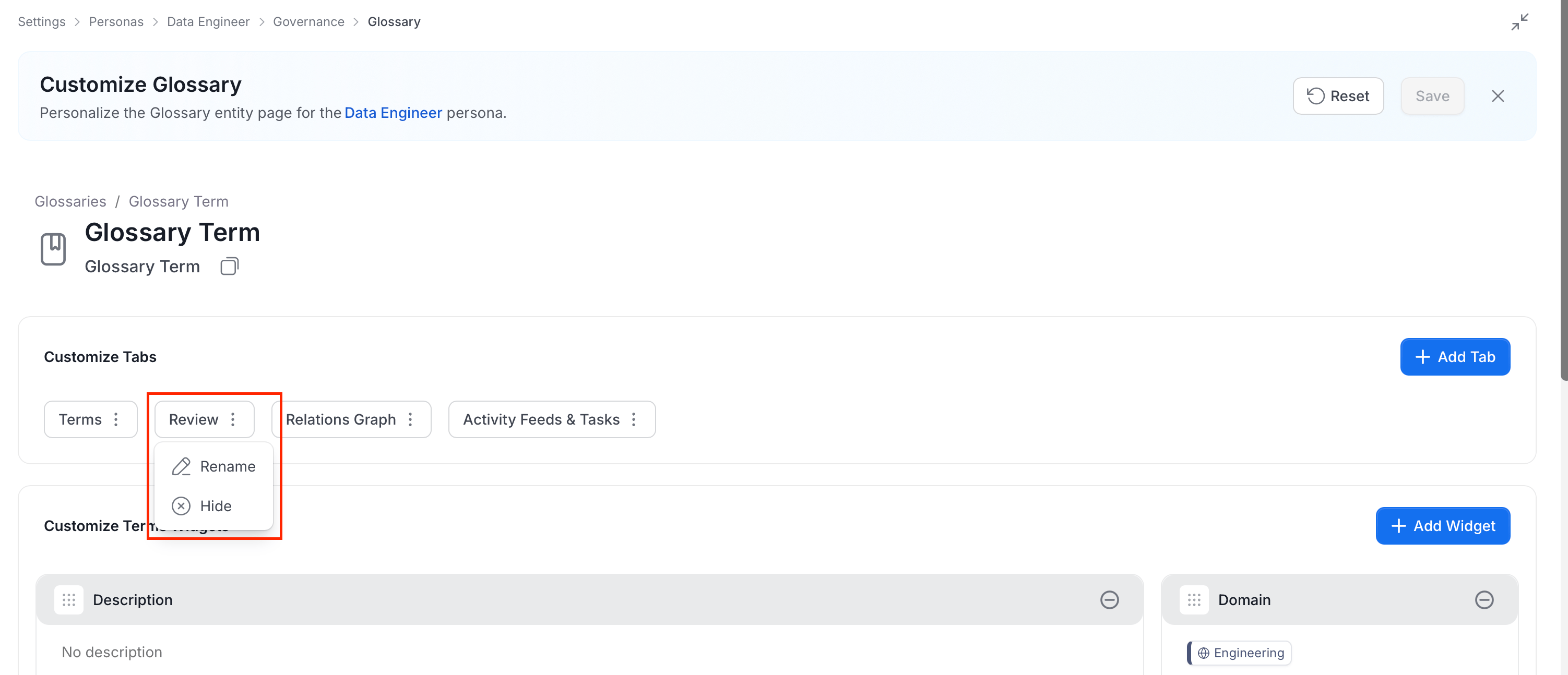
Under Customize Tabs, the Review tab is listed after Terms. Click the ⋮ icon next to Review and select Rename or Hide. Drag the tab to change its position.
- Click Save to apply your changes. Use Reset to discard them.
Switching Between Personas
Users can switch between different personas without logging out or reconfiguring the platform. Upon switching, the application’s landing page and configuration adjust automatically to reflect the new role.Setting a Default Persona:
Users can set a default persona, so the system displays the layout and settings relevant to that role every time they log in. Admins can also make a persona the organization default. Open the persona in Settings > Personas and click Set as Default in the page header. To undo it, click Remove Default. For more information, see Manage a Persona.Use Case Examples:
1. Data Engineer
- Needs: Data pipeline monitoring, data quality, and task management.
- Customized Landing Page: Includes the Pipeline Status, Data Quality, and My Tasks widgets. The KPIs widget might be deprioritized.
- Persona-Specific Widgets: Add the Pipeline Status widget for real-time updates on data workflows.
2. Data Steward
- Needs: Access to the assets they own and follow, performance indicators, and governance gaps.
- Customized Landing Page: Prioritizes the Yours and Followed and KPIs widgets, while removing unnecessary widgets such as Pipeline Status.
- Persona-Specific Widgets: Data stewards might add the Domains and Data Products widgets to spot missing owners and descriptions.