
Discovery & Search (Explore)
The Explore page is redesigned in 2.0. Filtering, browsing, pagination, ranking and export all behave differently. This is the most user-visible change in the release. The mental model changed from “the tree replaces your filters” to “the tree sets a browse location that stacks with your filters”.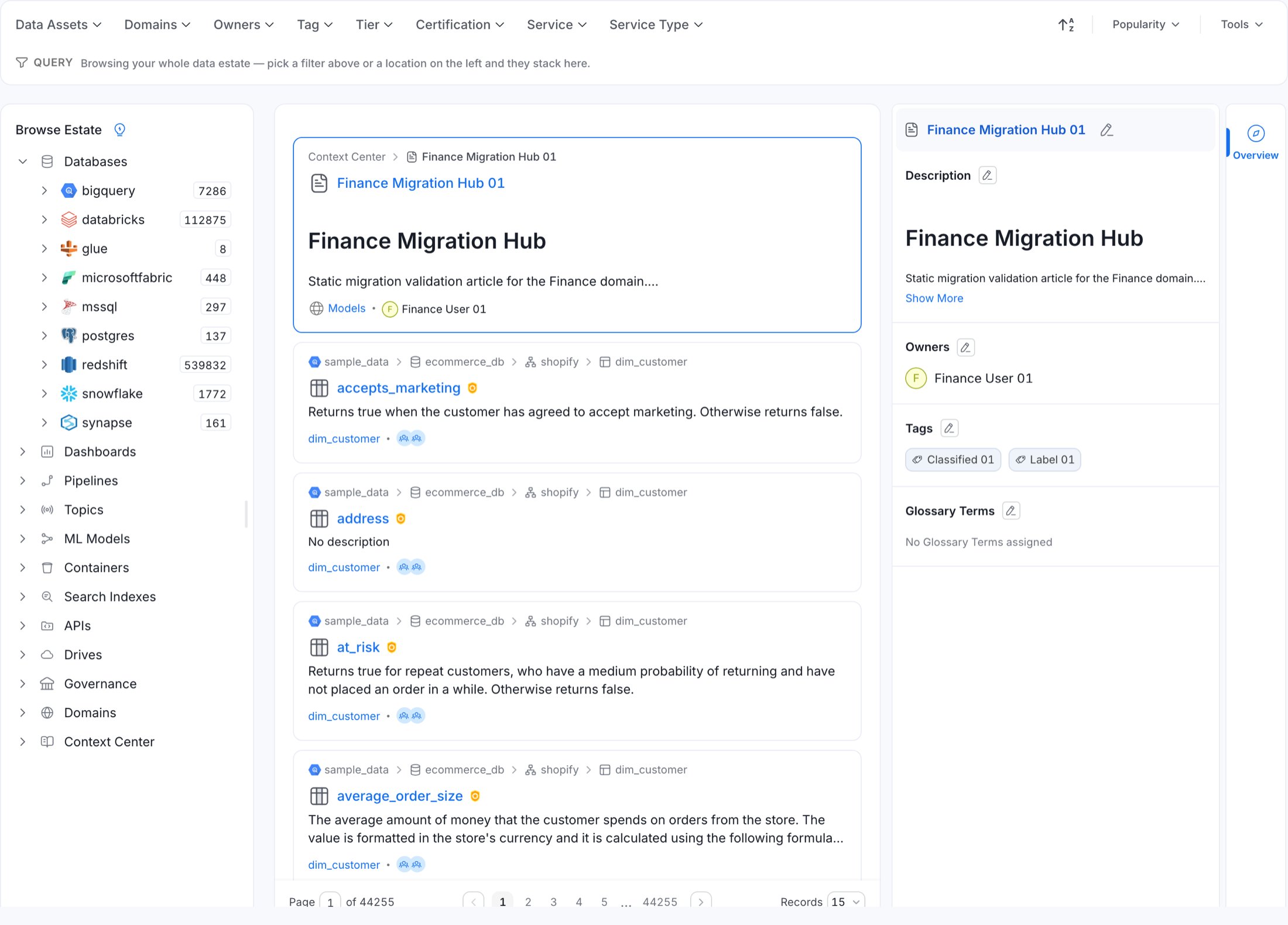
What changed at a glance
Explore URL parameters changed
- 1.13 URL
- 2.0 URL
?page=3&size=25 still loads Explore, but silently lands on page 1 at the default
page size. There is no error and no redirect.
The route itself (/explore/:tab) is unchanged.
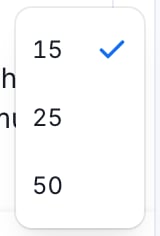
Page size is constrained to 15, 25 or 50
Behavioural. Explore accepts only 15, 25 and 50 rows per page. Any other
pageSize — including a
value inherited from the user’s stored global page size — is coerced back to 15.
Browsing no longer clears your filters
Behavioural. Affects every Explore user.
browsePath parameter, which is compiled into a separate
search filter and AND-ed with the dropdown filters.
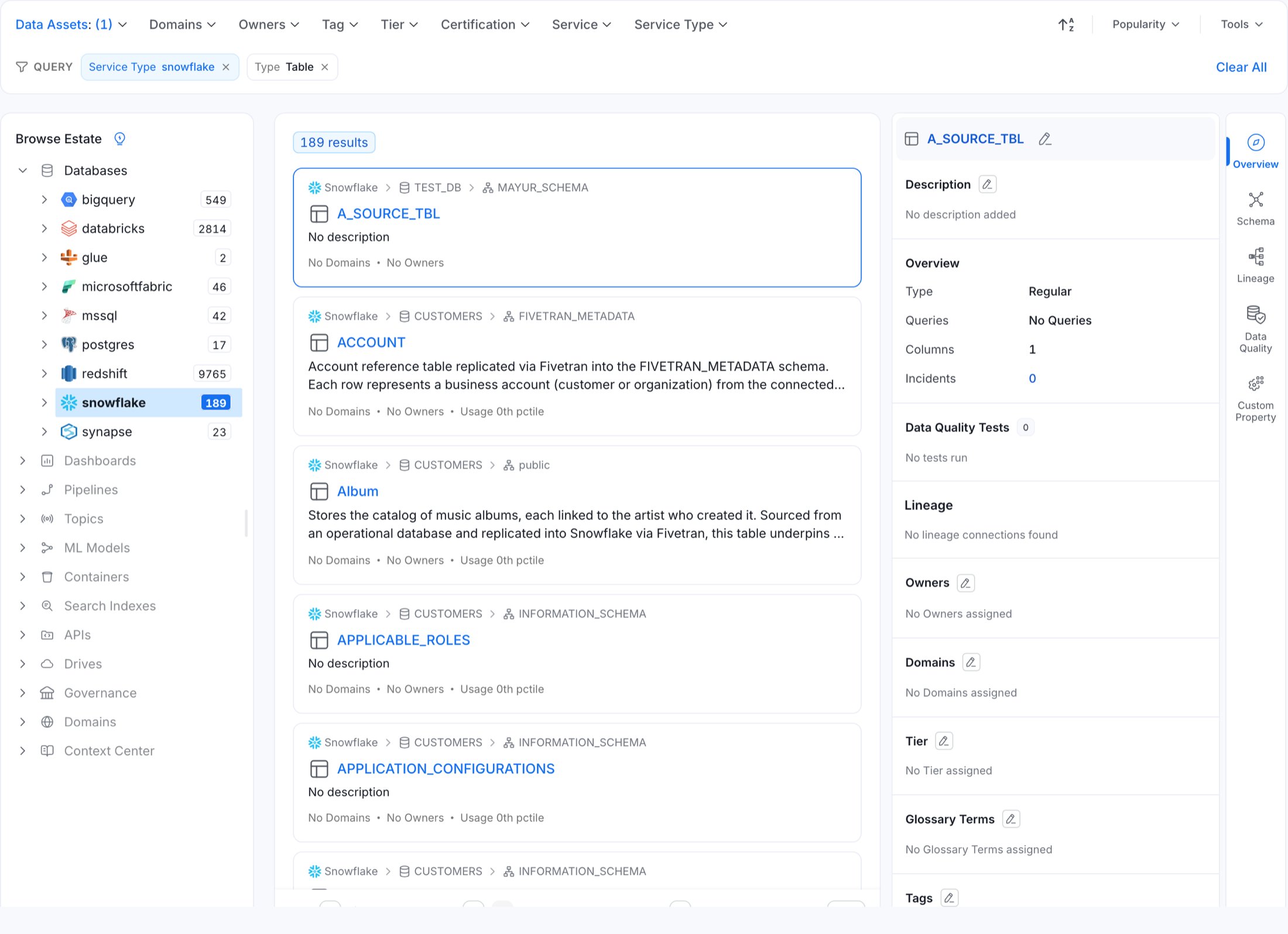
Service Type: snowflake (from the tree) and Type: Table (from the Data
Assets dropdown) are active together, the tree counts are re-scoped to the filter, and both are
rendered as removable chips.
What this means in practice:
- Selecting Tier 1 and then browsing to a schema keeps the Tier 1 filter.
- Clicking a type leaf (Tables, Columns) in the tree writes the parent levels into
browsePathand sets the type in the Data Assets quick filter — both land in one navigation. - Removing a browse chip truncates the path from that level down — dropping the Service chip also drops the Database and Schema beneath it.
- Category roots that cannot hold the selected asset type are greyed out. Selecting “Table” disables every non-Database service root.
The Explore quick filter uses
entityType.keyword, and values are stored lowercased
(tablecolumn, not tableColumn). If you construct quickFilter URLs by hand, use the lowercased
value.Facet options are scoped differently
Behavioural. Changes which options appear in each dropdown.
Table in Data Assets shrank the Data Assets dropdown to just
Table.
2.0 excludes a facet’s own field from its own aggregation, giving the conventional faceted-search
model:
- Within one facet, values are
OR-ed and the option list keeps showing the alternatives. - Across facets, constraints are
AND-ed. - The browse location is always applied, including to facet option lists.
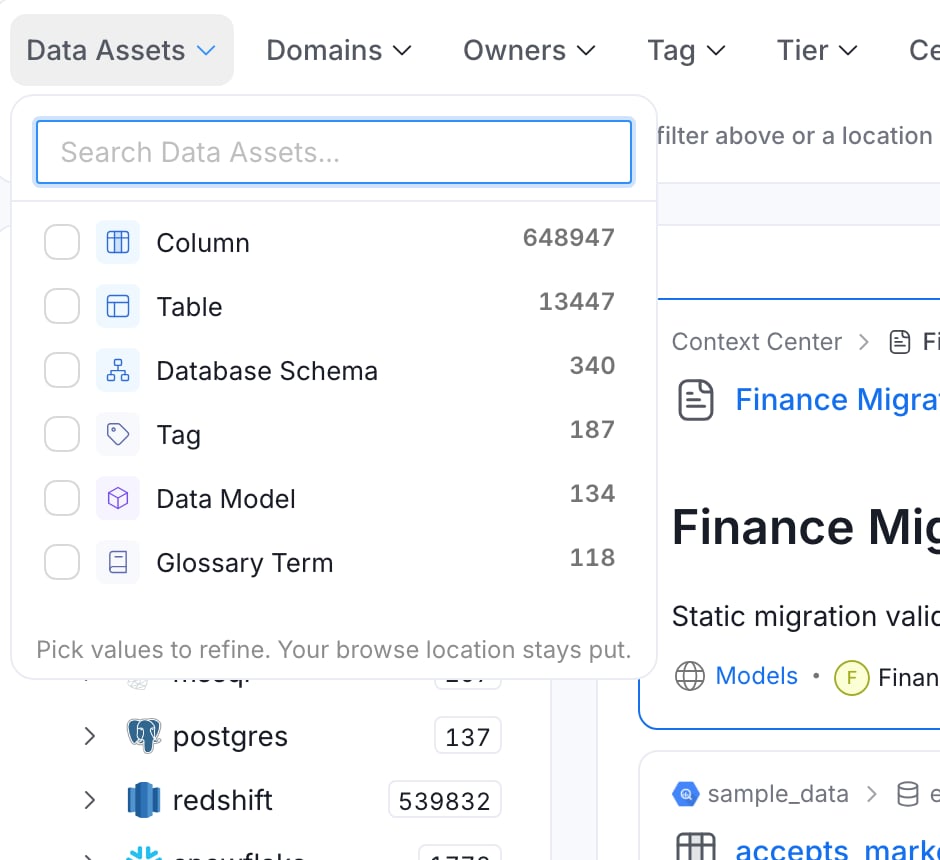
tableColumn renders as Column), and
the helper text “Pick values to refine. Your browse location stays put.”
The query chip row
New UI. Replaces the “Clear all” text link.

- Browse levels are labelled
In,Service Type,Service,DatabaseandSchema. - The Data Assets facet renders as
Typewith a human-readable label. - With nothing selected the row shows a placeholder: “Browsing your whole data estate — pick a filter above or a location on the left and they stack here."
"Clear all” scope changed
Tools menu changes
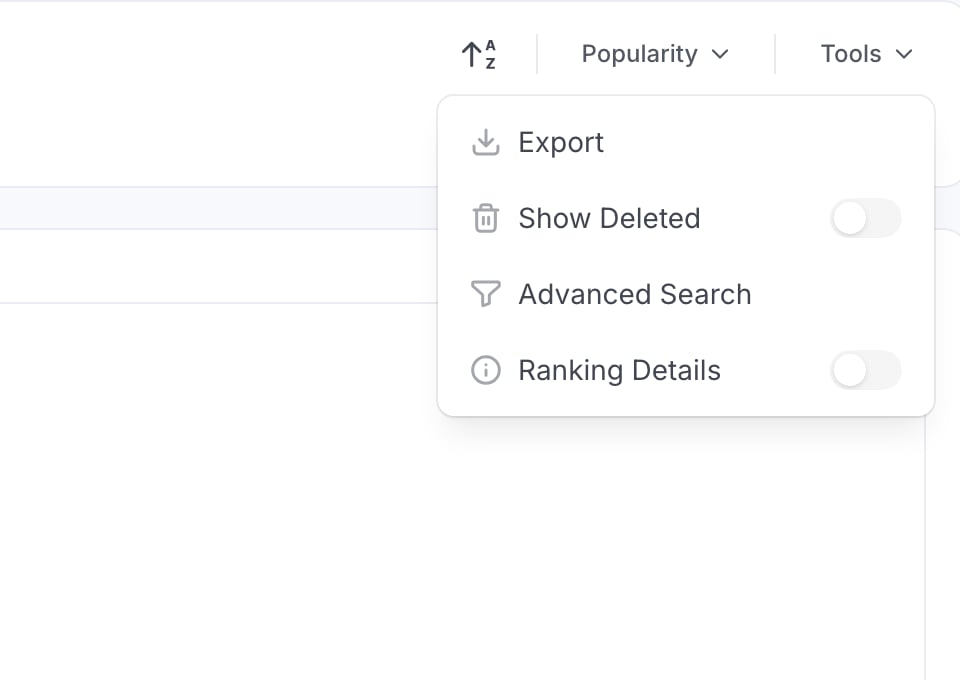
Ranking Details
Turning on Ranking Details re-runs the search with explanation enabled and renders, per result card, the relevance score, the score explanation, and which ranking stages matched. It is part of the Explore fetch key, so toggling it forces a refetch.Result ordering changes
Behavioural. Affects every search and Explore result list.
ranking block:
maxBoost: 2.0 so they act as tie-breakers
rather than dominating relevance. Setting ranking.enabled: false falls back to the legacy
searchFields scoring.
The 2.0.0 migration writes the default ranking configuration into any existing stored search
settings, merging in missing stages rather than overwriting operator customisations.
CSV export is now a background job
Behavioural. Affects Explore users exporting search results.
jobType: CSV_EXPORT and downloaded from GET /v1/csvAsyncJobs/{jobId}/result.
The export scope modal also changed: exporting “all” now covers the full tab result set with an
accurate pre-count, capped at 200,000 rows.
The synchronous endpoint still exists.
GET /v1/search/export is unchanged and still streams CSV
directly — only the UI switched to GET /v1/search/export/async. Scripted exporters do not need to
change.Explore result caching
Behavioural. Affects perceived freshness on tab switches.
- Cache hit — results render synchronously with no spinner, then a background refetch updates them.
- Cache miss — normal loading path.
- A stale-response guard drops in-flight responses whose key no longer matches the current search, so a slow response can no longer overwrite a newer result set.
Explore tree count semantics
Behavioural.
Search API changes
Thesearch_after parameter is now repeated once per sort value instead of comma-joined. See
API & Schema Contracts for the
full search API contract changes.